Chapter 1: The Bhagavad Gītā
~5,100 years ago, the Pāṇḍavas and Kauravas fought the Kurukṣetra War in modern-day Haryana, India.1
The Bhagavad Gita is a 700 verse dialogue between Lord Krishna (Divine Consciousness) and Arjuna on Kurukshetra’s battlefield before the war's commencement.2
This work is interpretive and takes creative liberties.
Generations before the war
Before Śantanu wore the crown, King Pratīpa prepared his eldest son, Devāpi, to succeed him. But priests and elders barred the beloved prince because of his skin disease, and Devāpi withdrew to the forest. Bāhlīka, Pratīpa and Sunandā’s second son, inherited his maternal grandfather’s kingdom. With Bāhlīka’s consent, the Kuru throne passed to their youngest, Śantanu.4
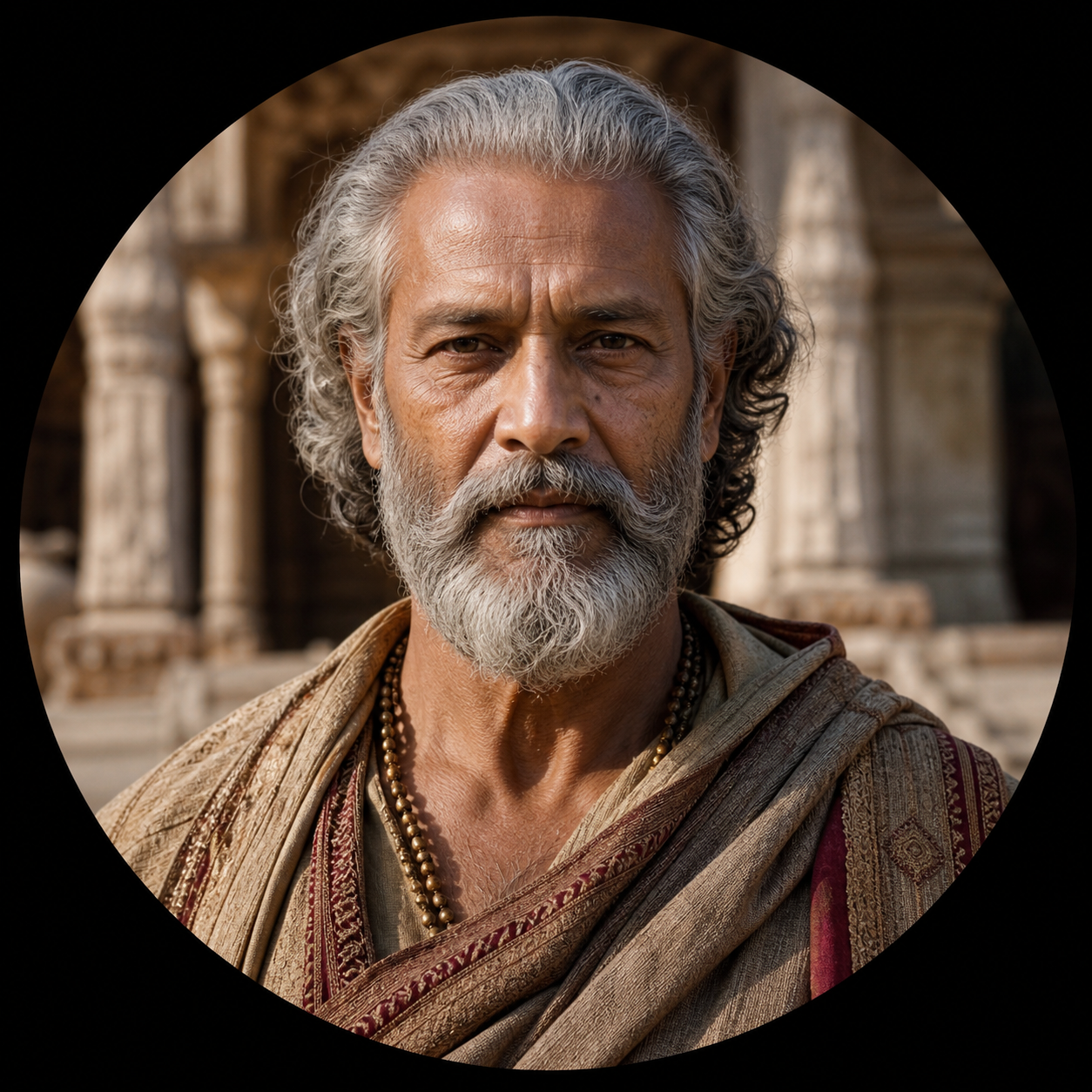 PratīpaKuru king
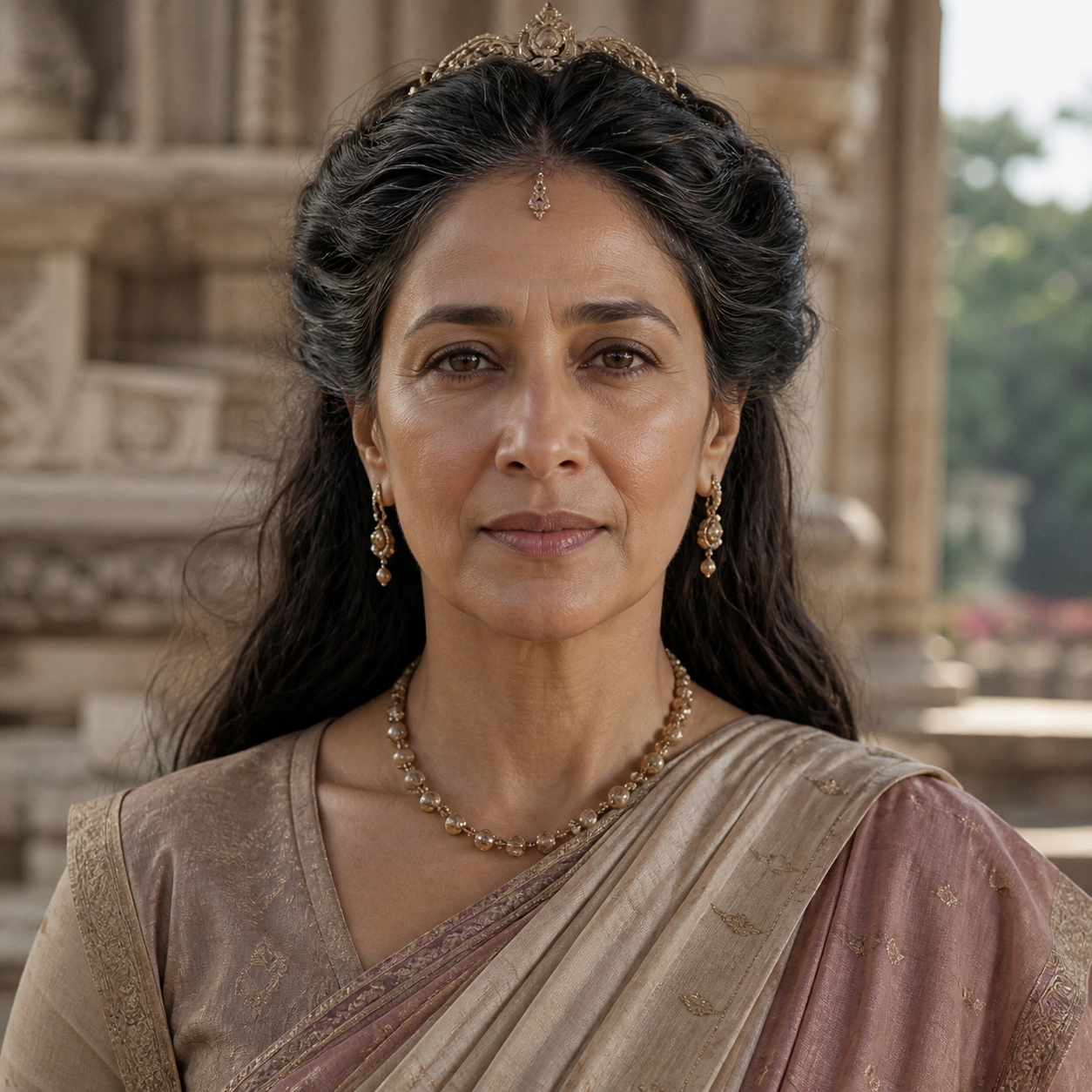 SunandāDaughter of Śivi
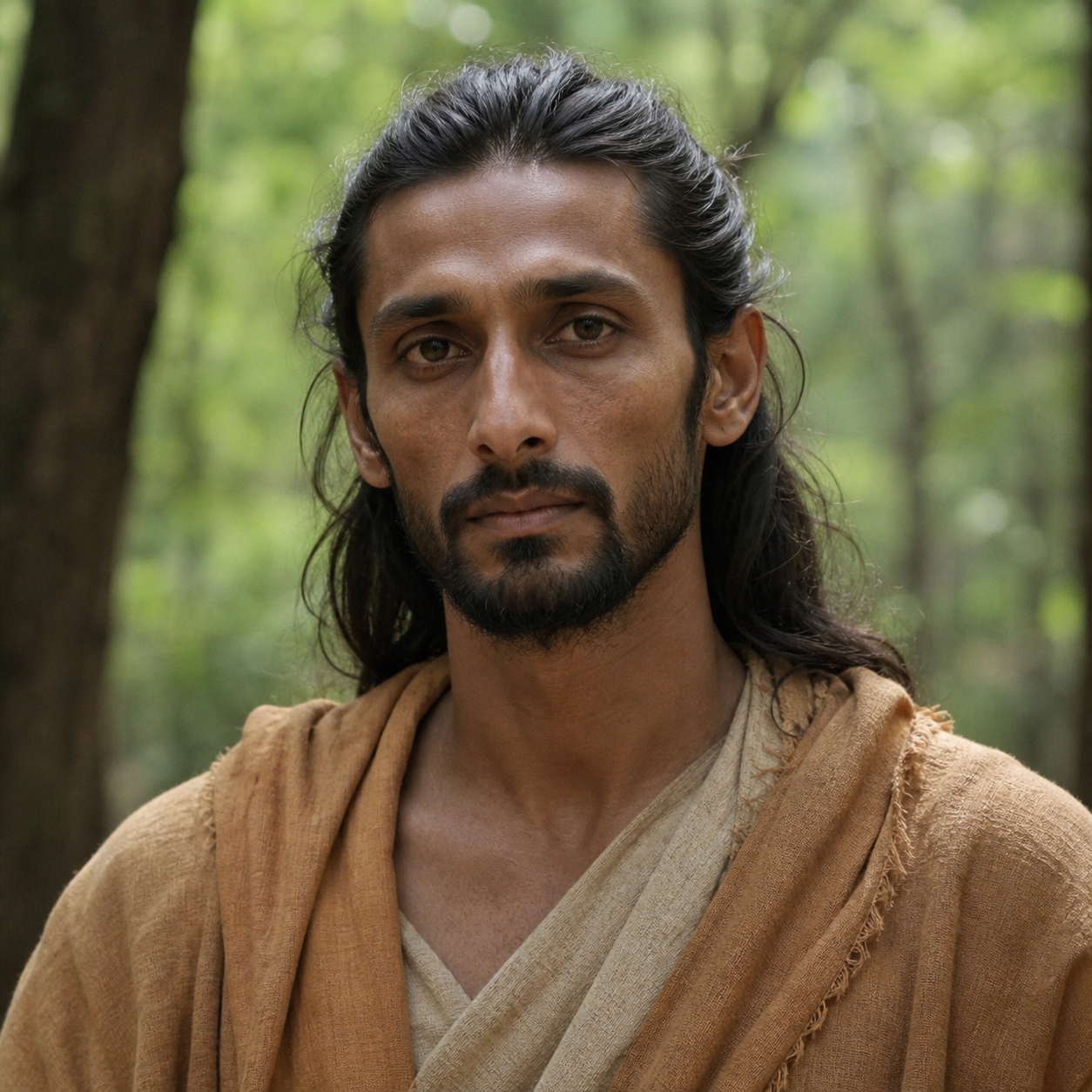 DevāpiEldest · withdrew to the forest
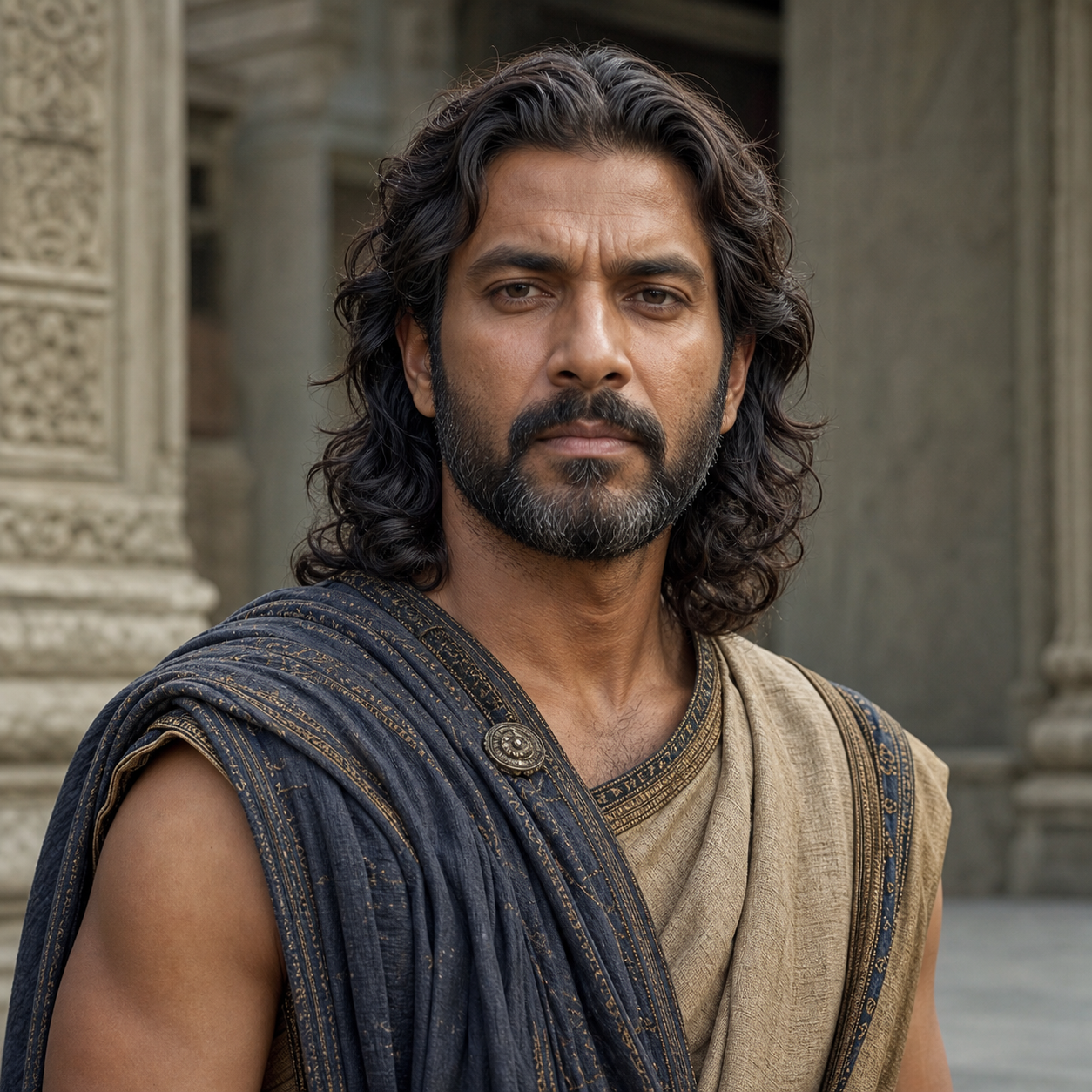 BāhlīkaSecond · maternal inheritance
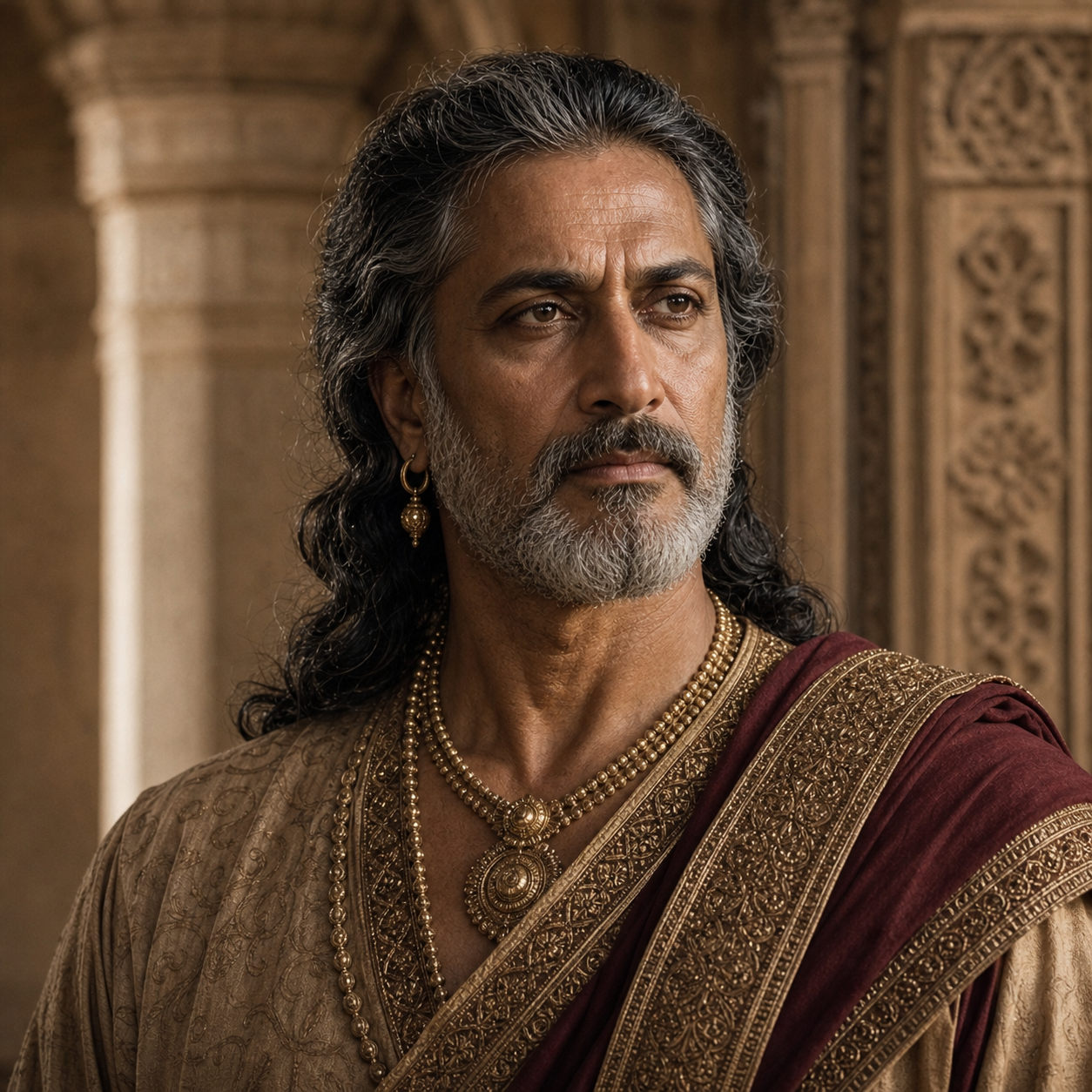 ŚantanuYoungest · succeeded to Kuru
After Śantanu’s death, Chitrāṅgada took the throne. Bhīṣma then placed his younger brother, Vicitravīrya, on the throne. Vicitravīrya married Ambikā and Ambālikā but died without an heir.8
Satyavatī then asked Vyāsa to continue the royal line through niyoga. Vyāsa fathered Dhṛtarāṣṭra with Ambikā, Pāṇḍu with Ambālikā, and Vidura with a maid.9
Dhṛtarāṣṭra was born blind, so his younger brother Pāṇḍu took the throne.11
A curse forced Pāṇḍu to give up royal life and later caused his death. Dhṛtarāṣṭra took over the kingdom and raised Pāṇḍu’s five sons alongside his own. Yudhiṣṭhira, Pāṇḍu’s eldest son, stood to inherit the throne. Duryodhana feared that Yudhiṣṭhira’s descendants would rule instead of his own.12
Duryodhana and his allies tried to kill the Pāṇḍavas in the house of lac, seized their kingdom through a rigged dice match, and forced them into thirteen years of exile. The Pāṇḍavas returned and sought peace, eventually asking for only five villages. Duryodhana refused, and both sides prepared for war at Kurukṣetra.13
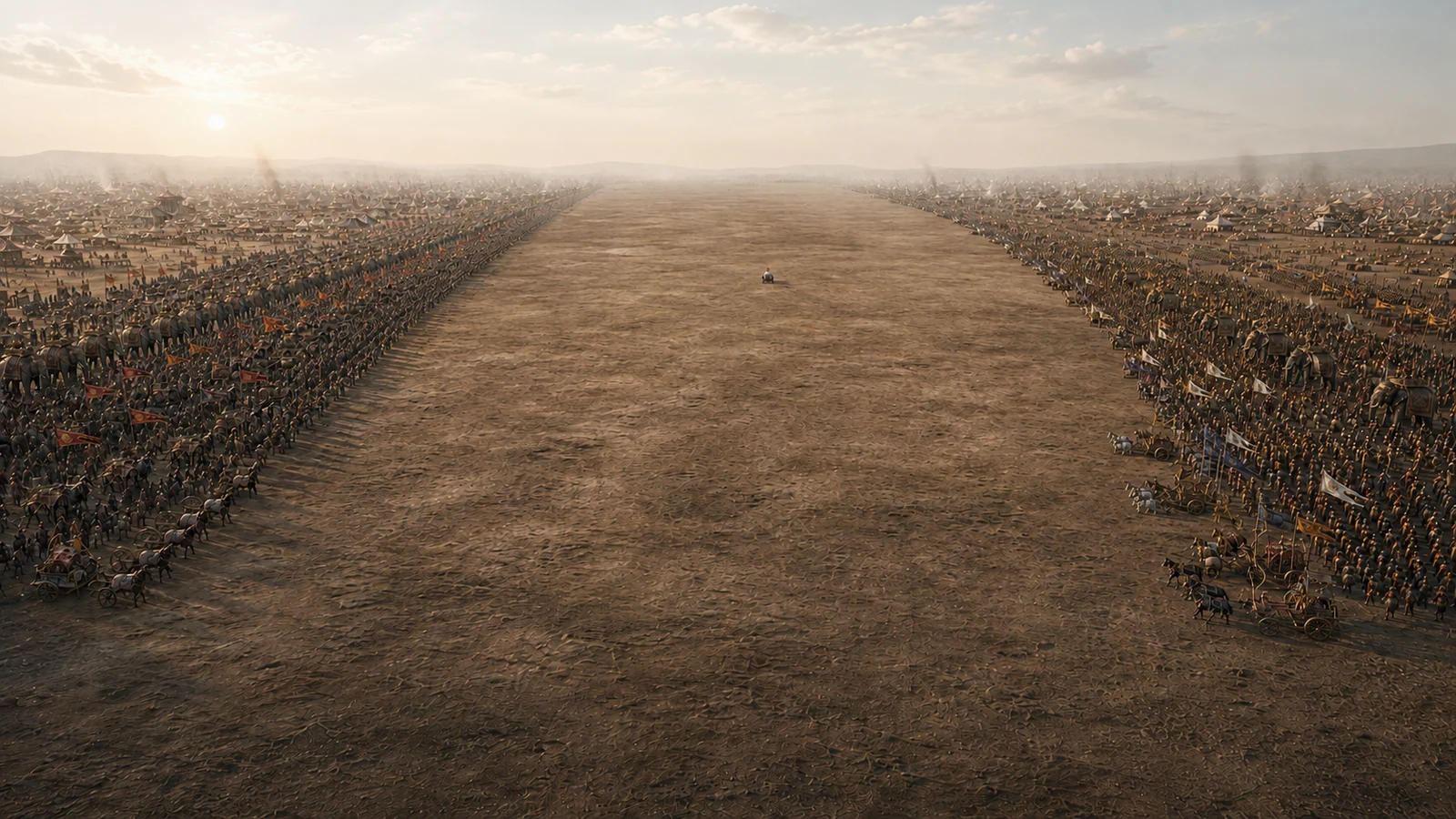
The Pāṇḍavas and Kauravas assembled at Kurukṣetra. The war that followed lasted eighteen days.14
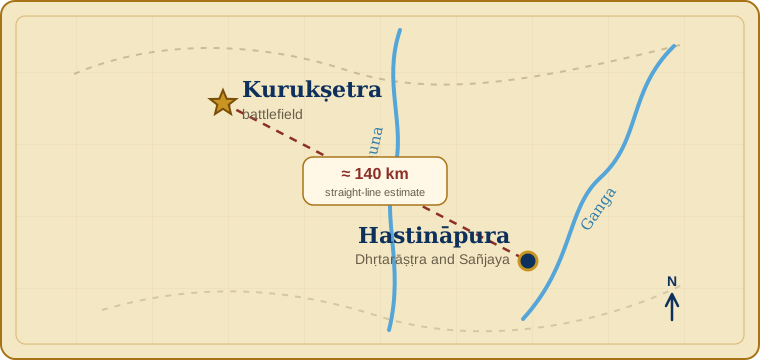
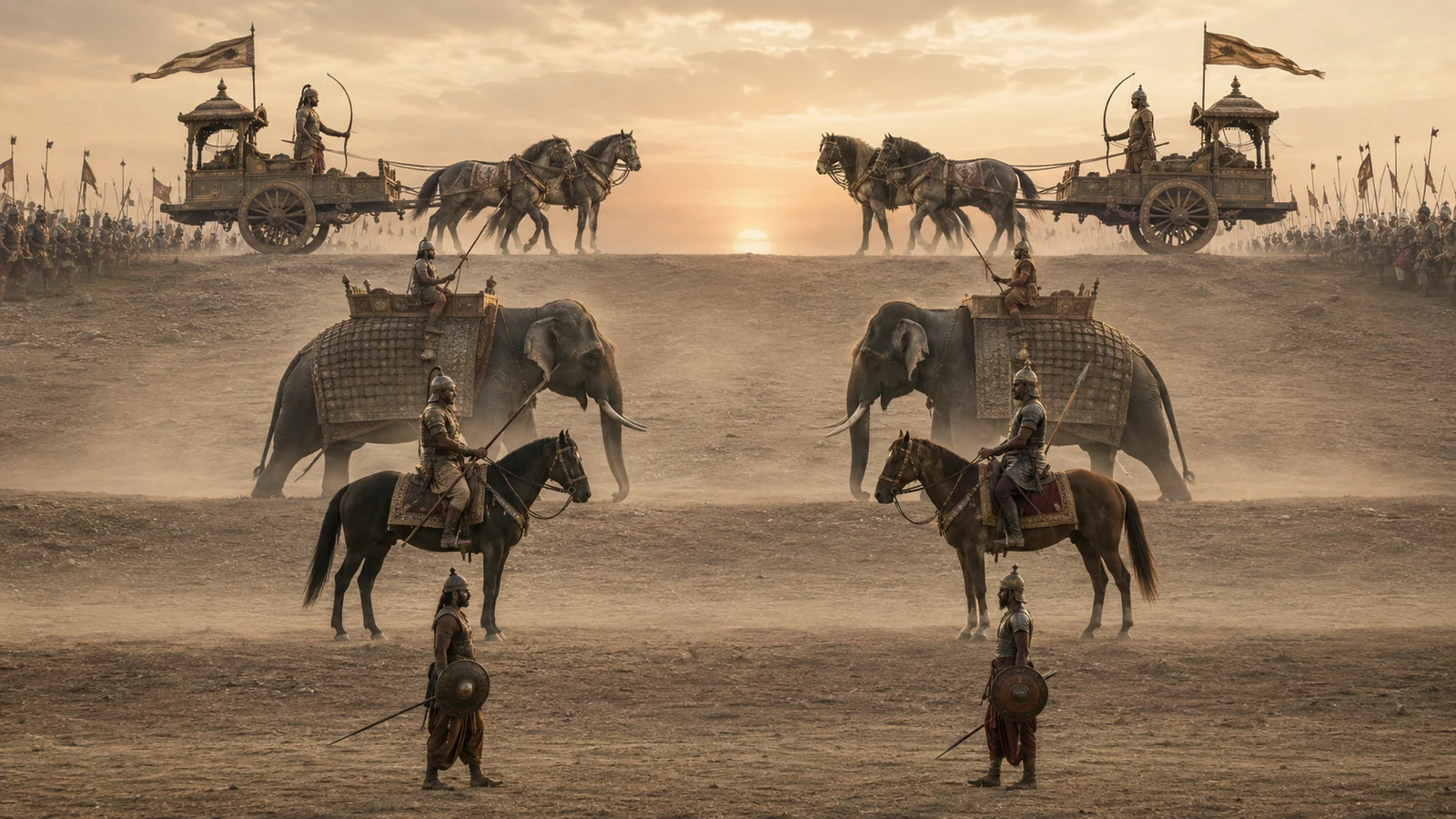
Dhṛtarāṣṭra, the blind Kuru ruler, remains in Hastināpura. Vyāsa offers him divine sight to witness the battle, but Dhṛtarāṣṭra refuses to watch his family’s destruction and asks to hear it instead. Vyāsa grants Sañjaya celestial perception, allowing him to know events at Kurukṣetra, including hidden actions and thoughts. Sañjaya recounts the battle to Dhṛtarāṣṭra. Both armies take their positions before sunrise and wait for battle.15
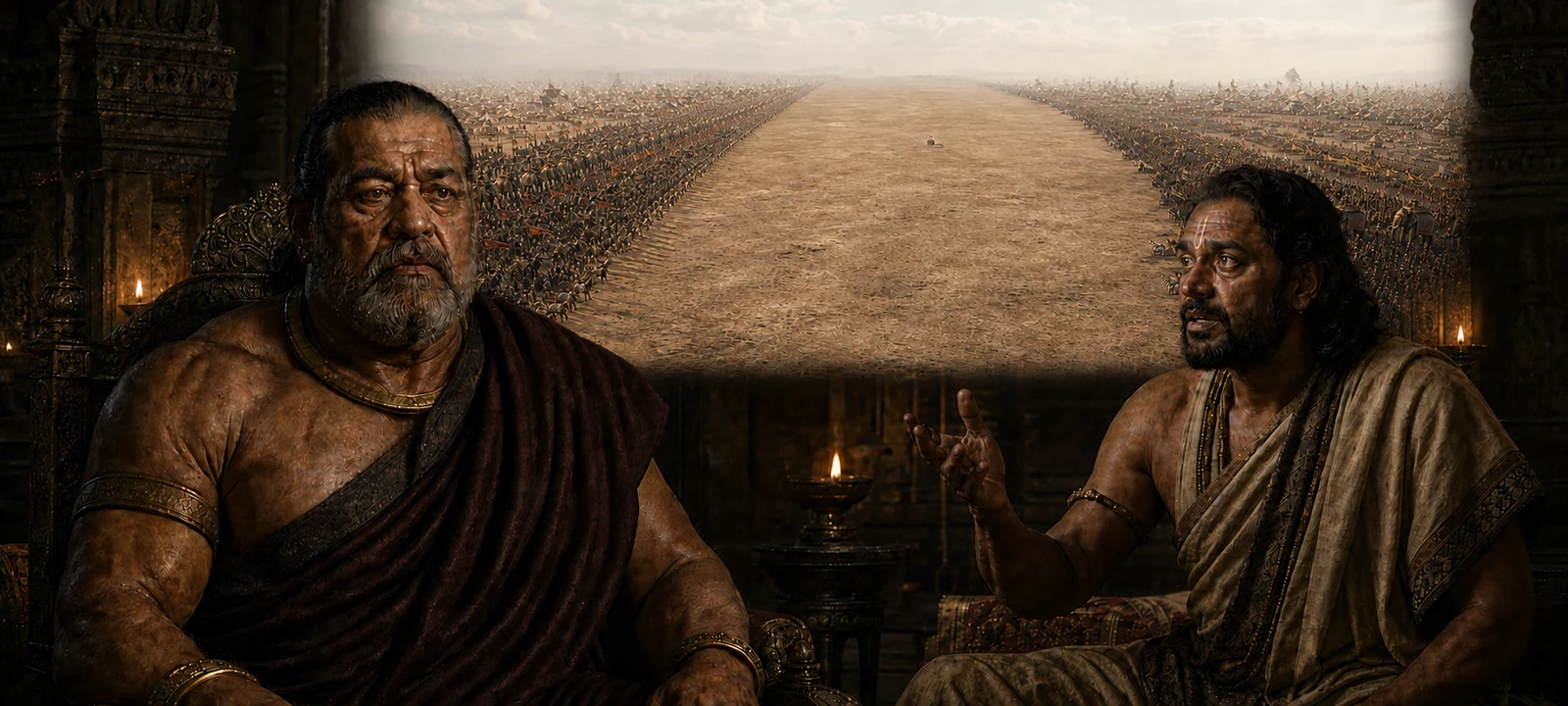
The Bhagavad Gītā reaches Dhṛtarāṣṭra through Sañjaya’s account. The Mahābhārata credits Vyāsa with composing the epic and Vaiśampāyana with reciting it to King Janamejaya.19
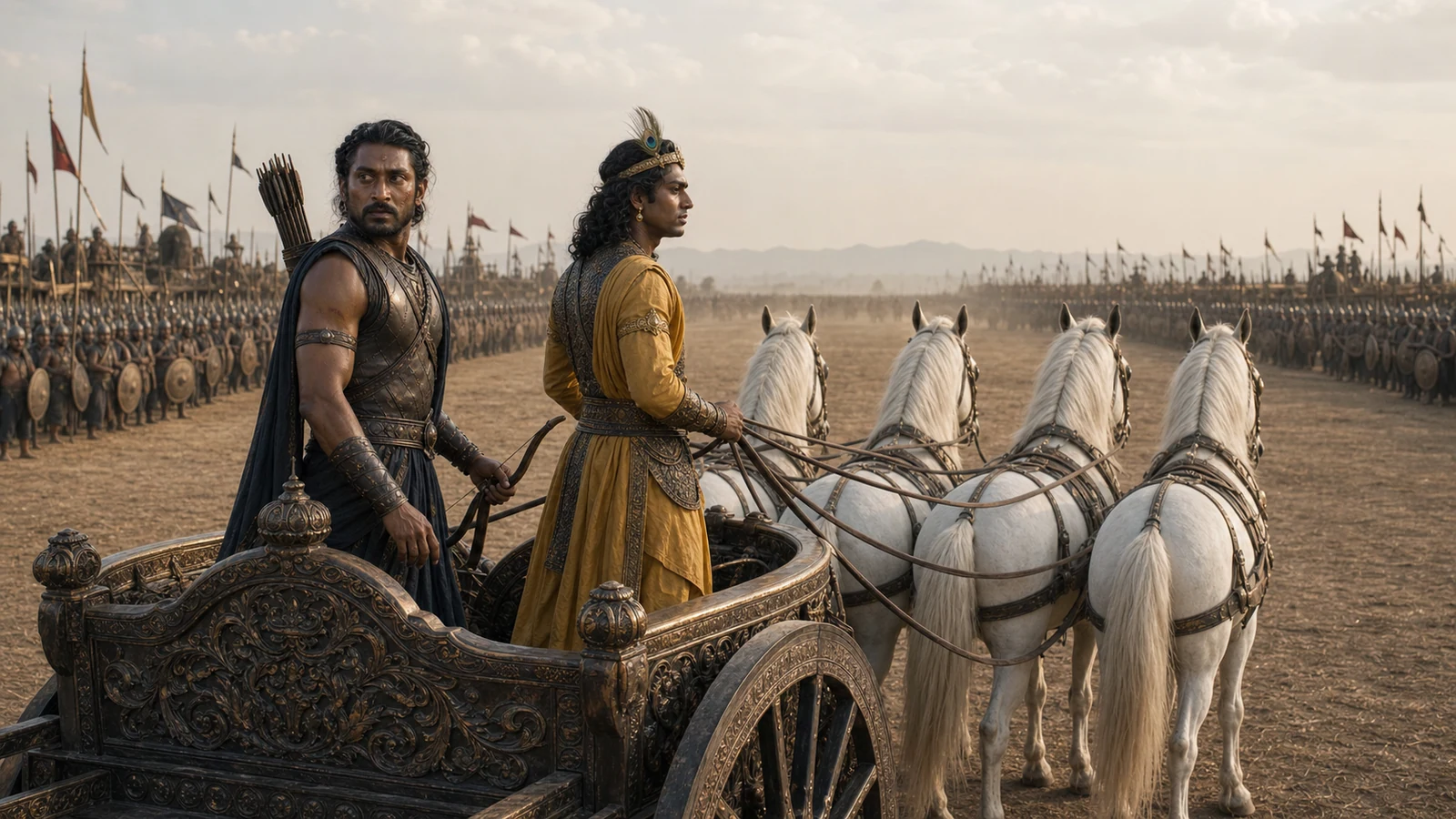
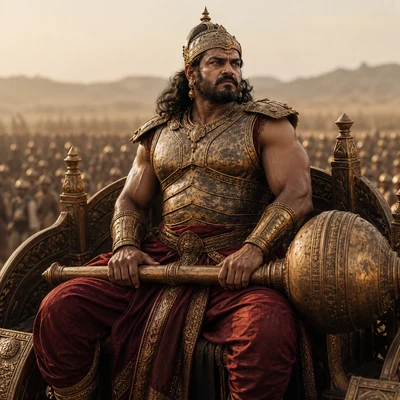
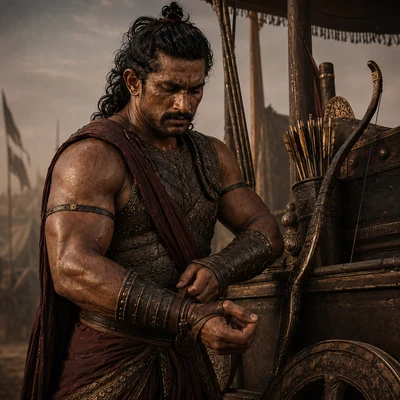
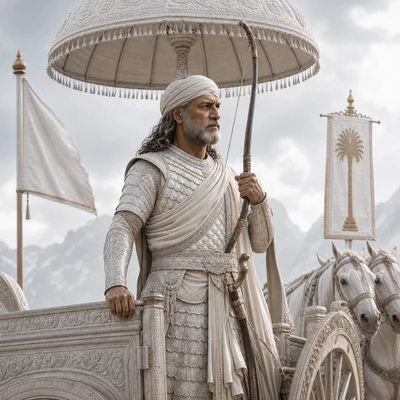
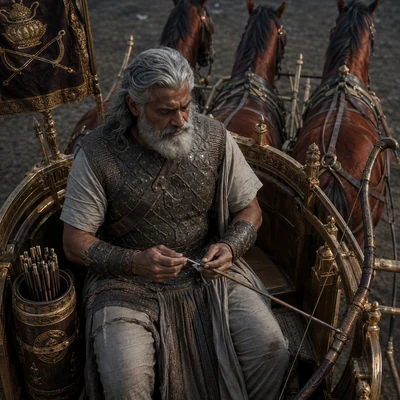
Sañjaya describes the armies at sunrise. He sees coats of mail, gold-adorned elephants and chariots, thousands of standards, and warriors carrying bows, swords, scimitars, maces, javelins, and lances.
Kauravas vs. Pāṇḍavas
Each combatant appears with a battlefield strength or role.2021
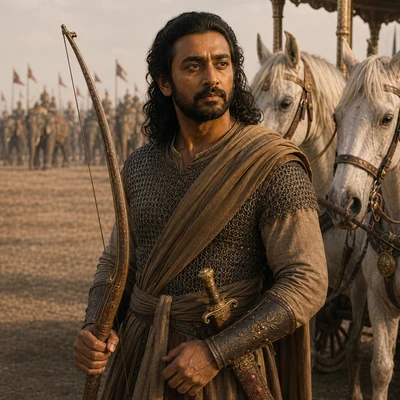
Pāṇḍava side
- Yudhiṣṭhira
- Command anchor who personally defeats the final Kaurava commander
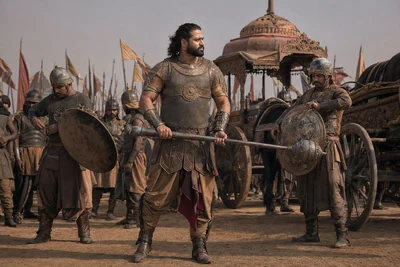
- Bhīma
- Heavy-assault fighter who breaks dense formations and clears a path for his army
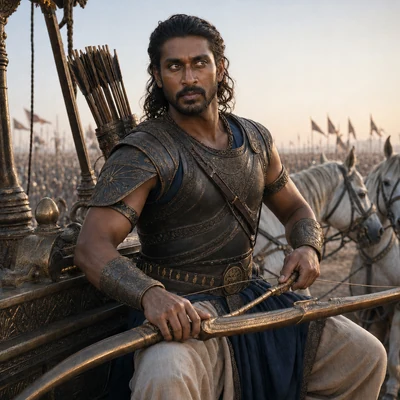
- Arjuna
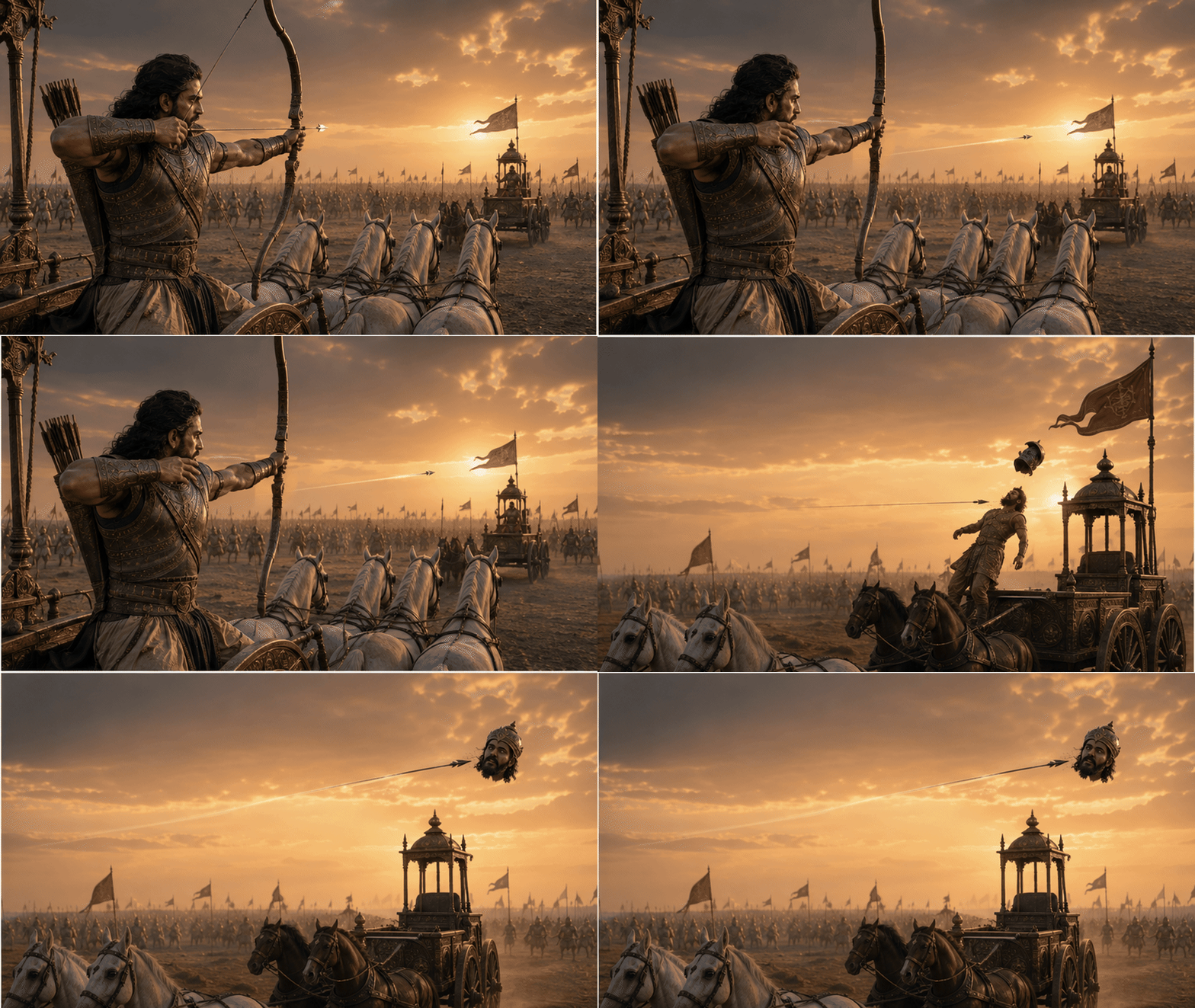
- Precision archer for defended, time-critical objectives
- Abhimanyu
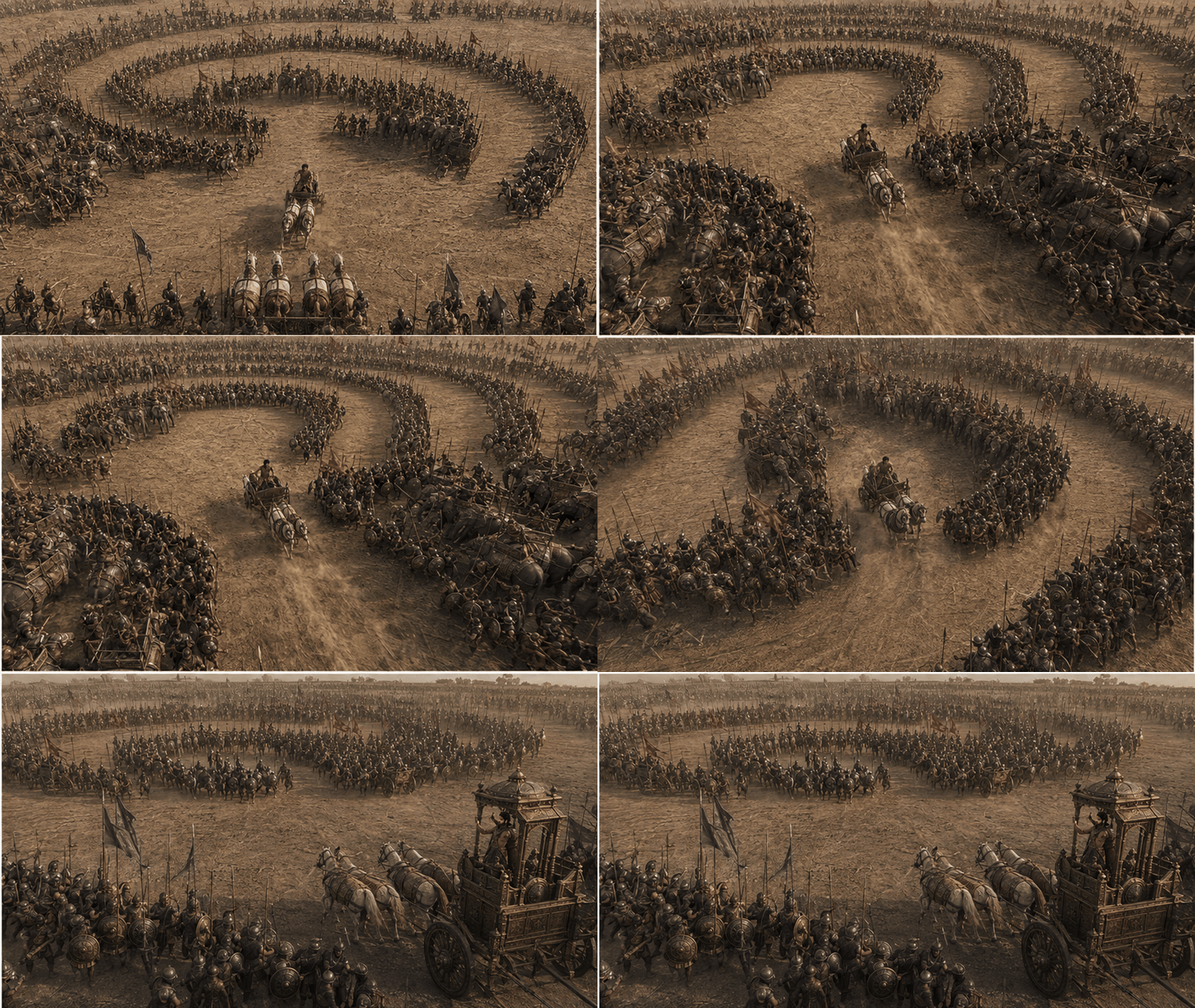
- Formation breaker who opens a route through Droṇa’s circular array
- Nakula
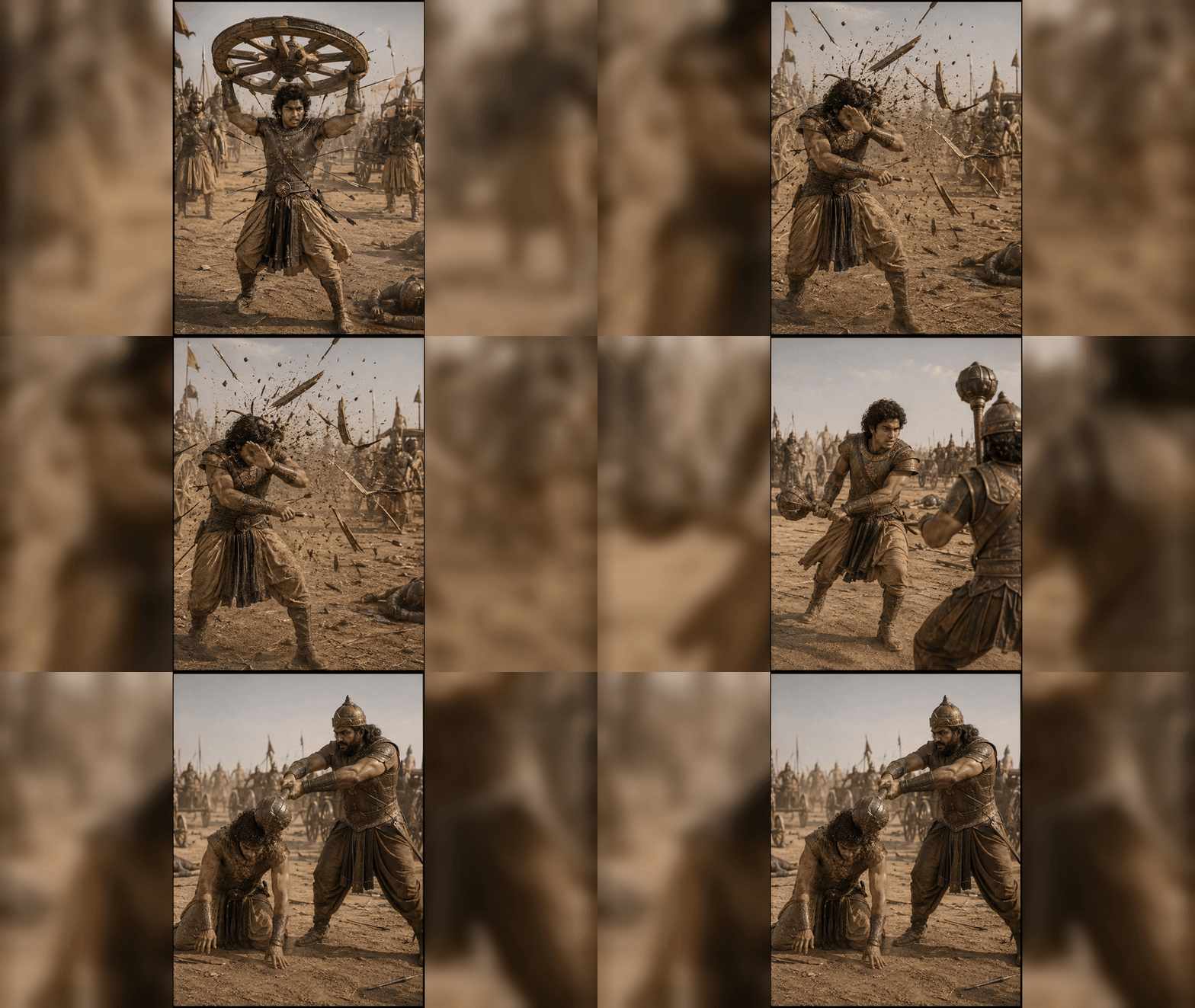
- Mobile close-combat fighter who breaks encirclement after dismounting
- Sahadeva
- Warrior who pursues and defeats Śakuni
- Dhṛṣṭadyumna
- Army commander who checks Droṇa and opens a lane for the advance
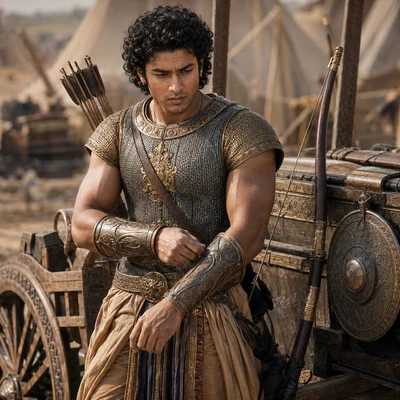
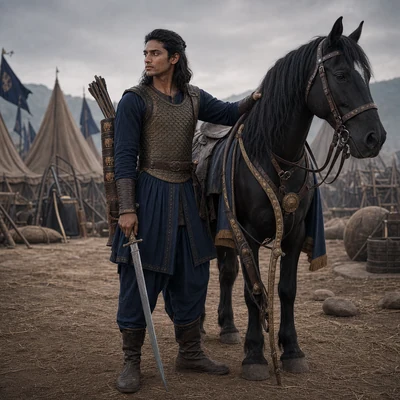
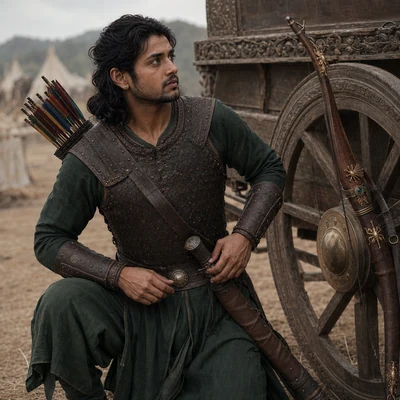
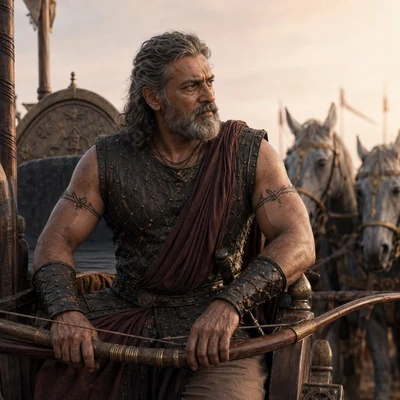
Kaurava side
- Duryodhana
- Rallying leader who restores a collapsing line and blocks pursuit
- Duḥśāsana
- Chariot archer who pins the opposing commander under sustained fire
- Bhīṣma
- First commander; his archery drives enemy formations back
- Droṇa
- Second commander who penetrates and controls multiple divisions
- Kṛpa
- Precision counter-chariot archer who disables opposing vehicles
- Karṇa
- Late-war commander and elite archer tasked with breaking Pāṇḍava formations and confronting Arjuna
- Aśvatthāman
- Droṇa’s son and celestial-weapons specialist; his Nārāyaṇa weapon forces the opposing army to disarm
- Śalya
- Final commander who briefly reverses the battle with a counteroffensive
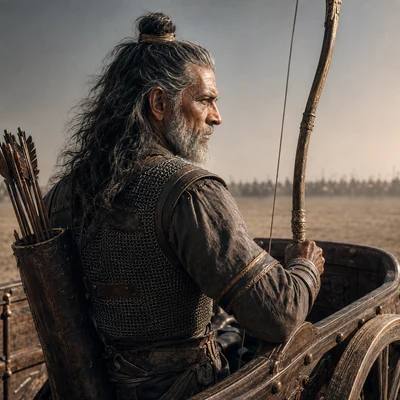
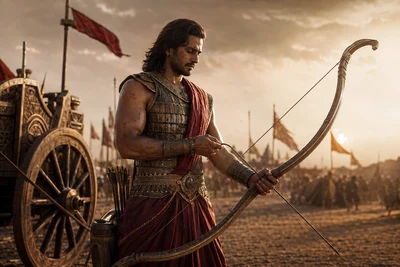
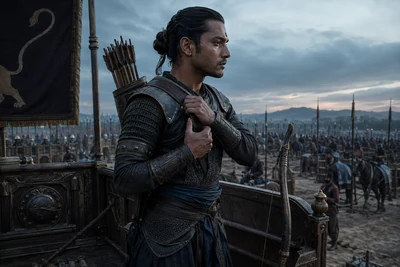
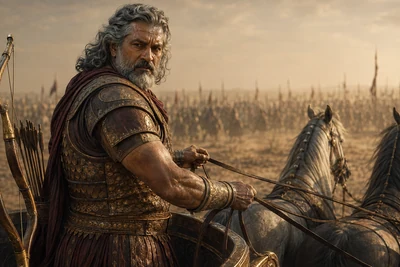
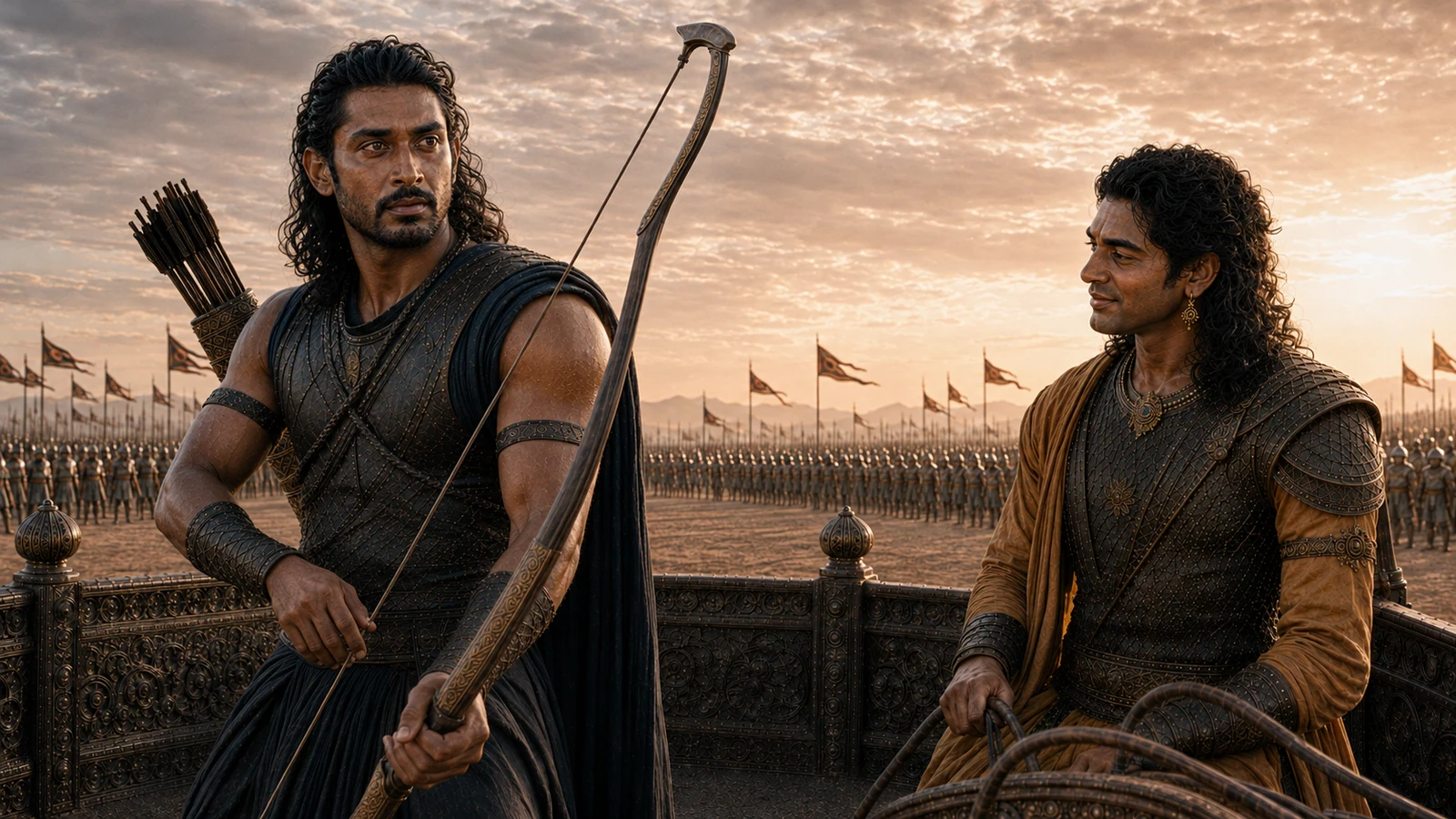
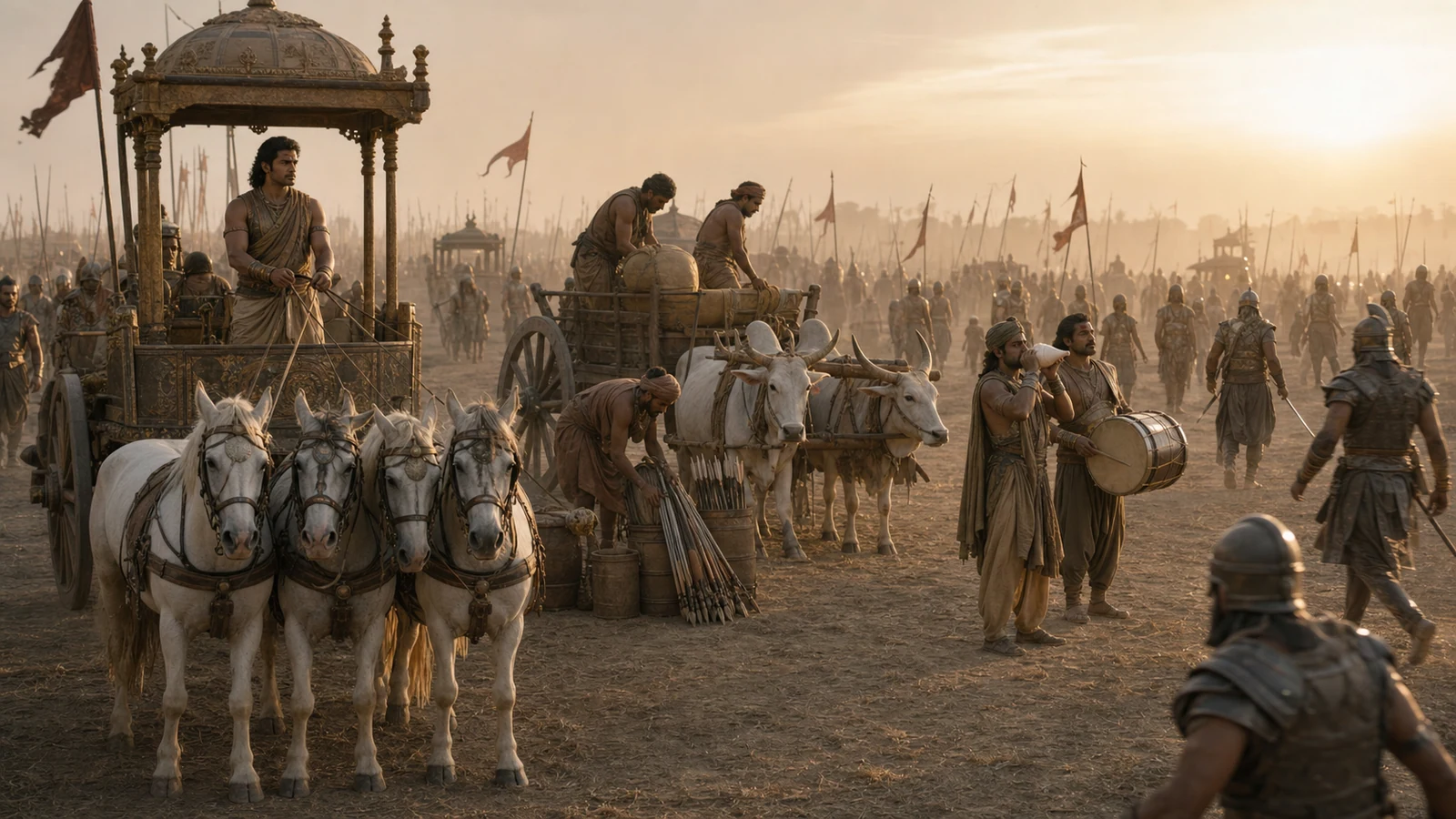
The conches sound. Arjuna raises Gāṇḍīva and asks Kṛṣṇa to move their chariot forward:
“O infallible one, please draw my chariot between the two armies so that I may see those present here.”
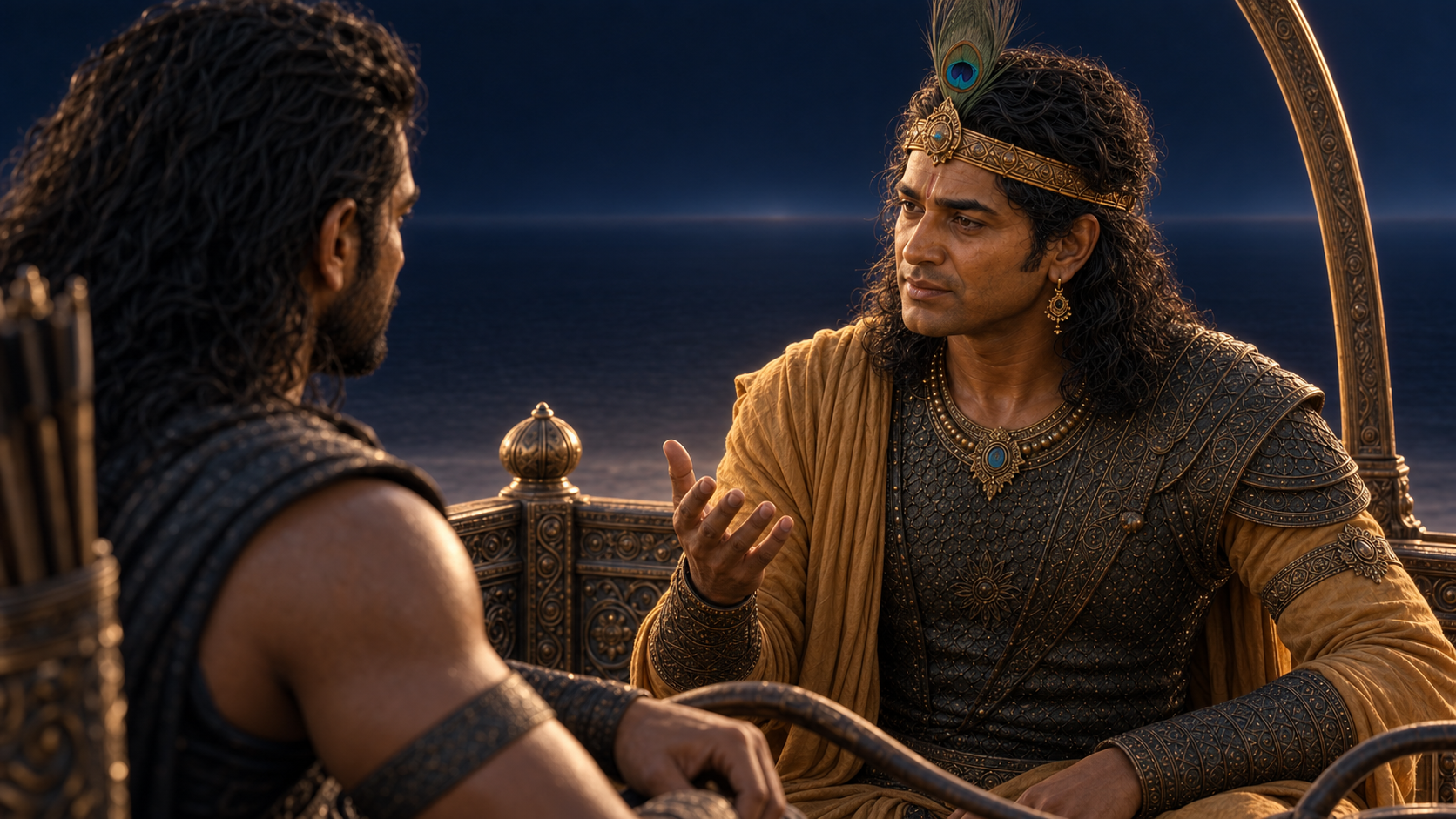
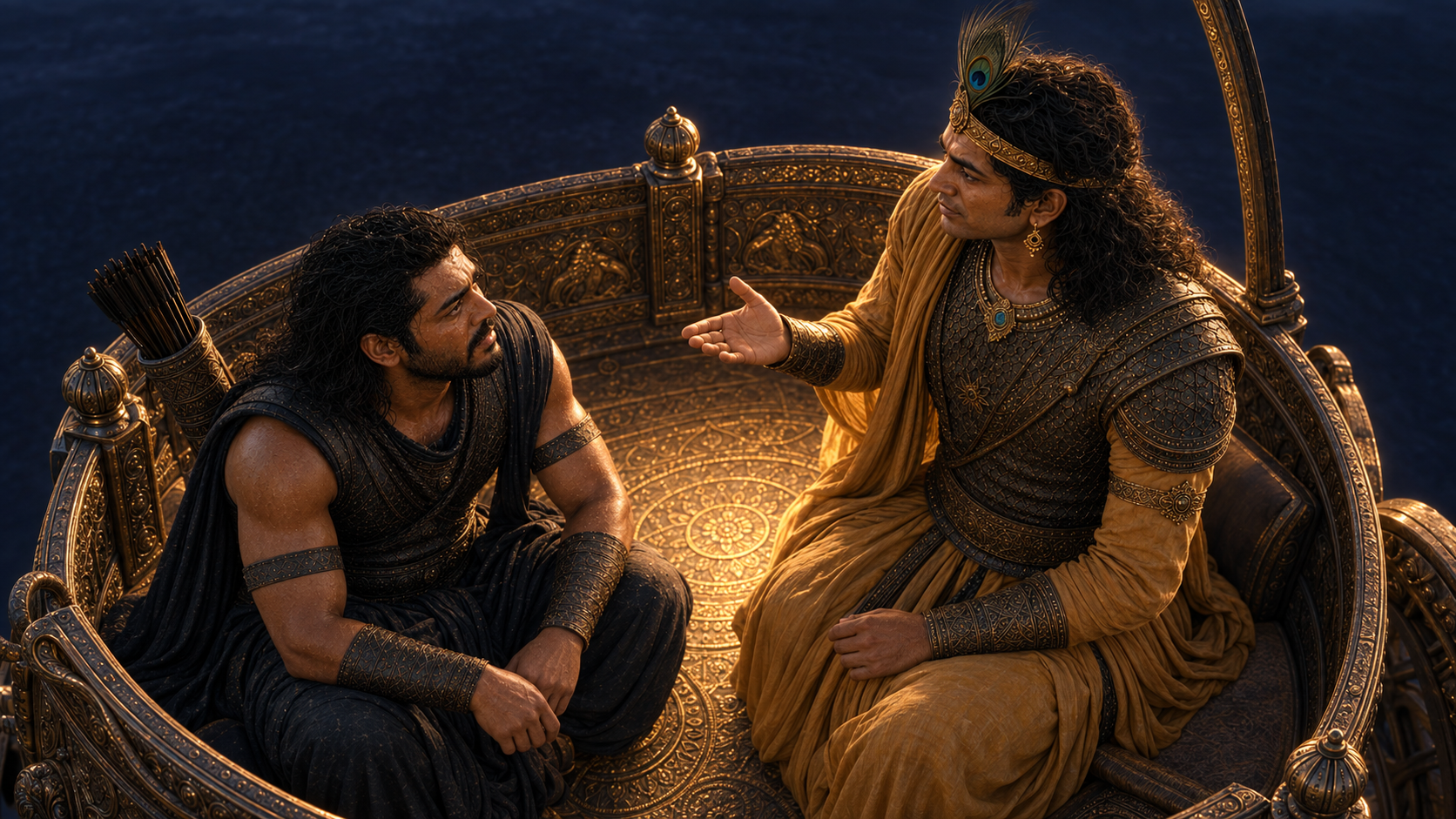
Kṛṣṇa positions the chariot before Bhīṣma, Droṇa, and the assembled rulers. He tells Arjuna, “Just behold, Pārtha, all the Kurus assembled here.”23 Arjuna recognizes grandfathers, teachers, uncles, brothers, sons, friends, in-laws, and well-wishers in both armies.24
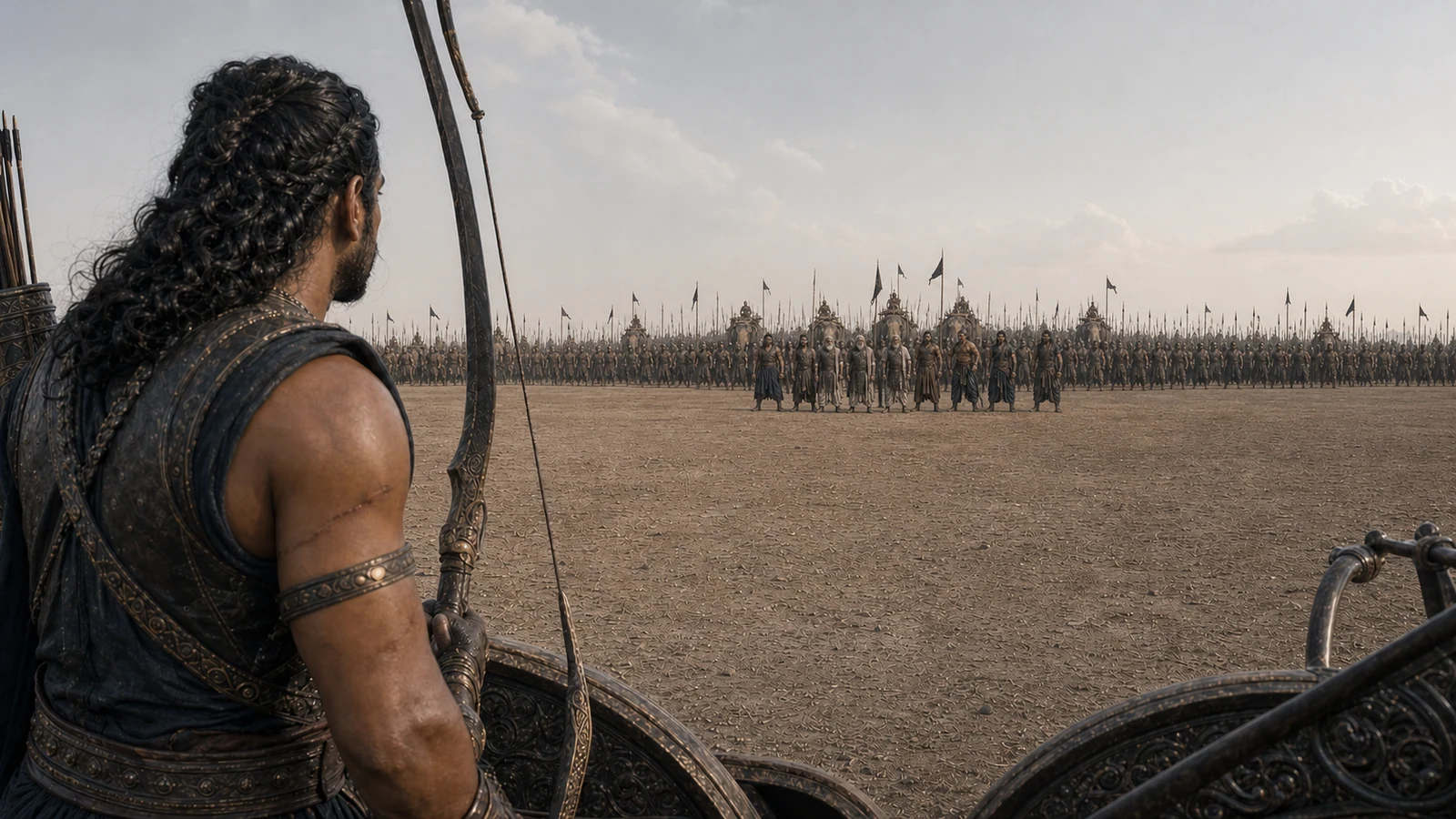
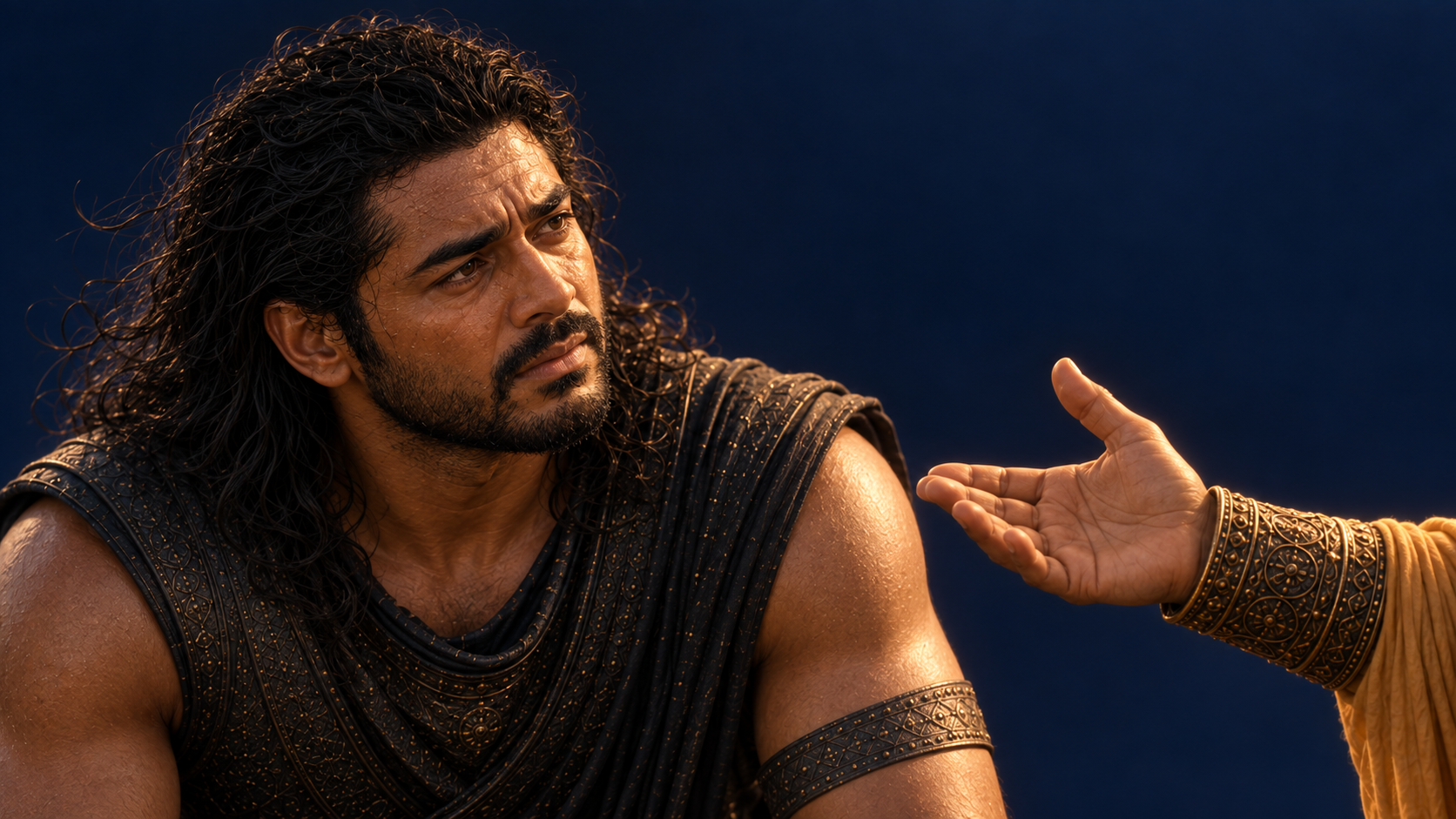
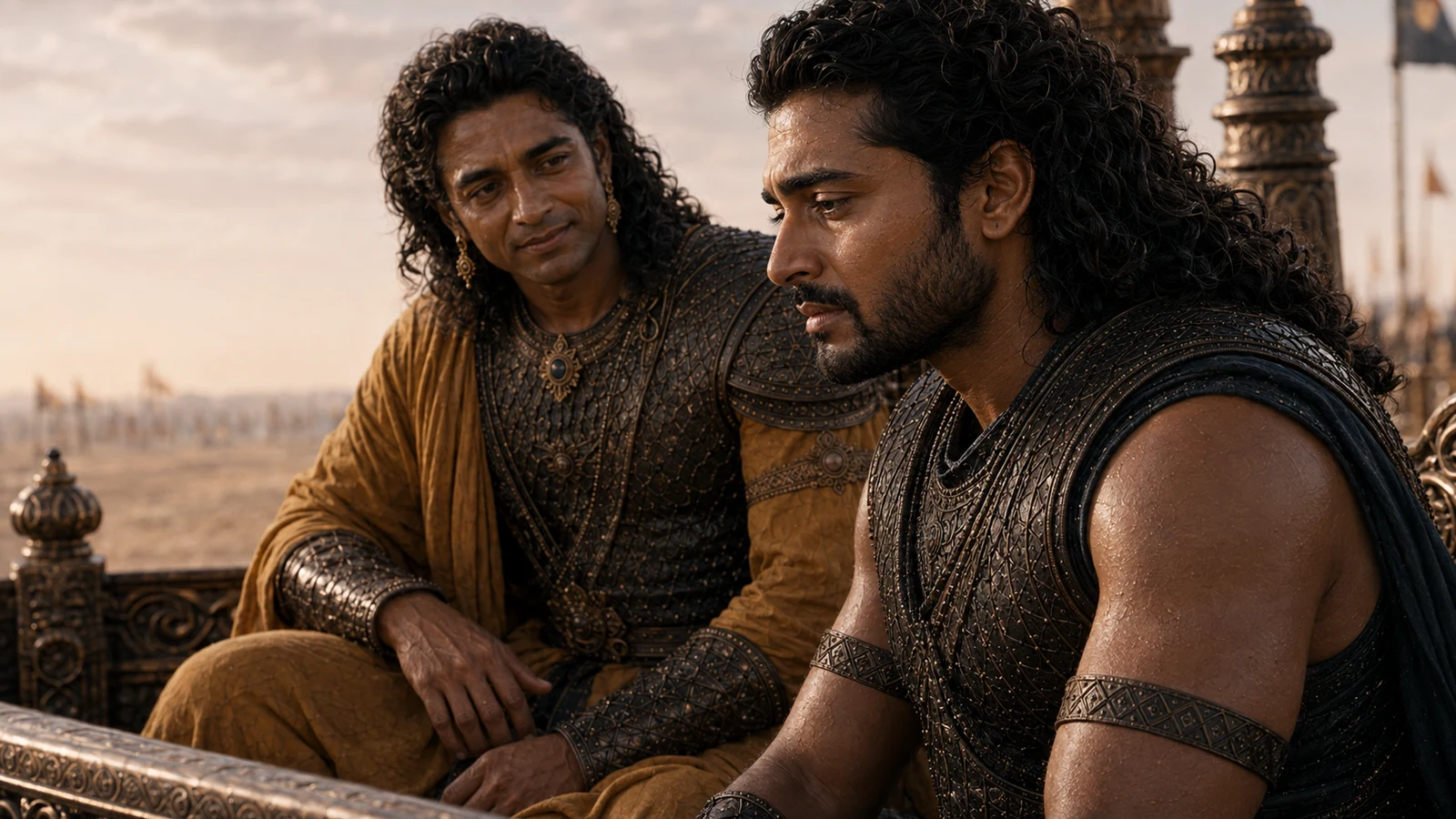
Arjuna sees his family among the warriors. The prospect of killing them overwhelms him.
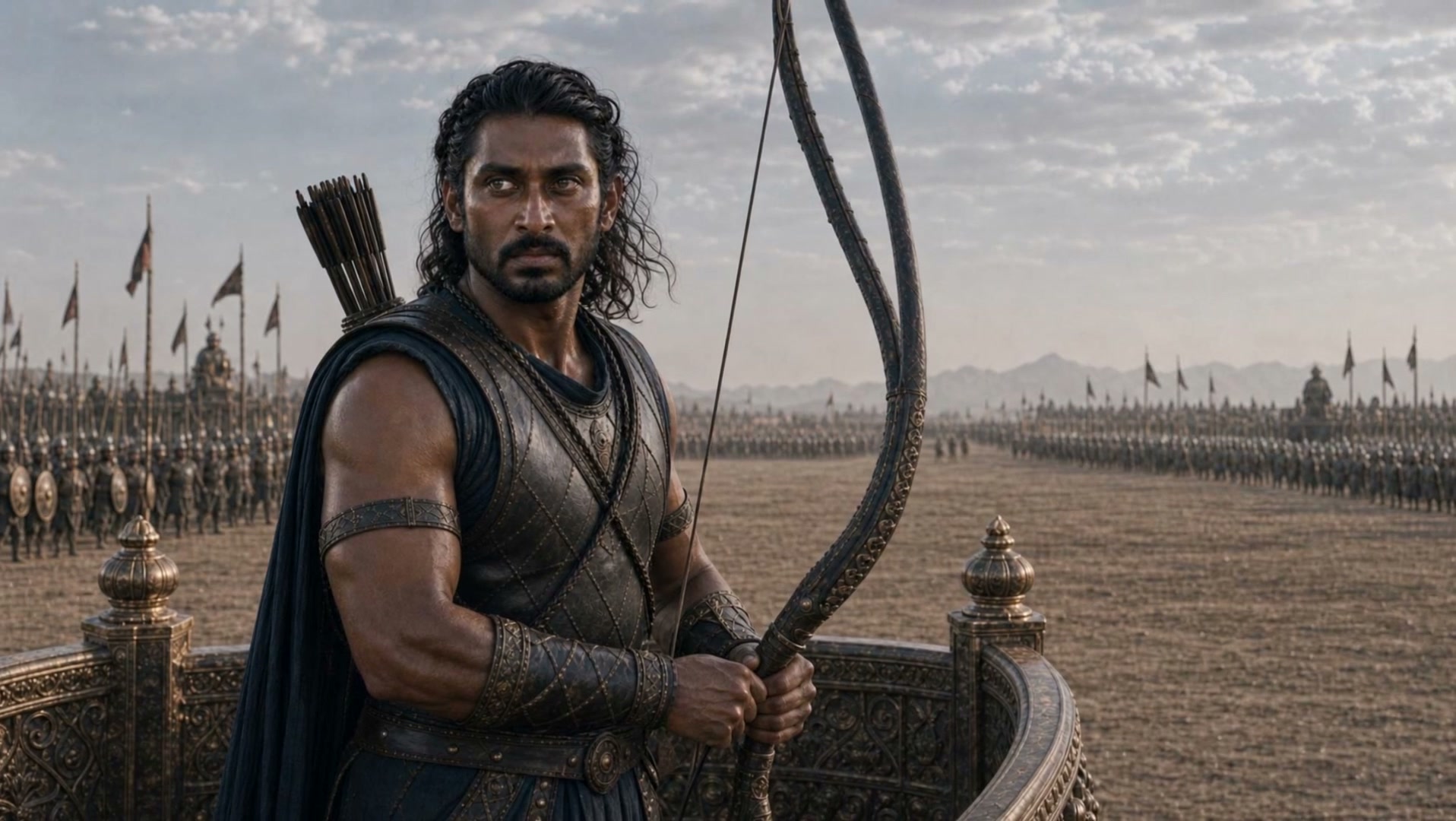
His limbs tremble. His mouth dries. His hair stands on end.
Gāṇḍīva slips from his hand. His skin burns.
He cannot remain standing; his mind reels.
Arjuna, 1.28–3025
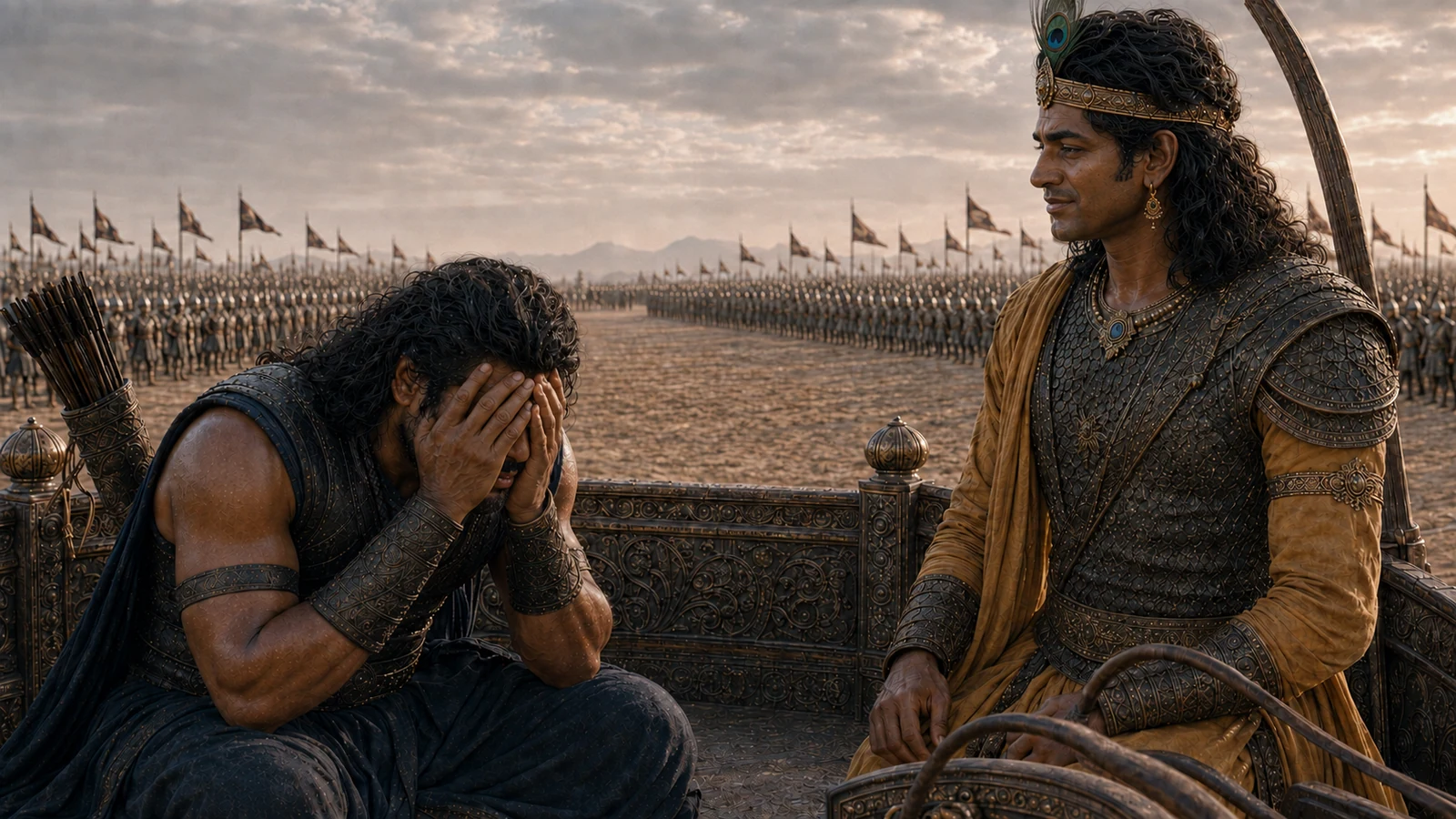
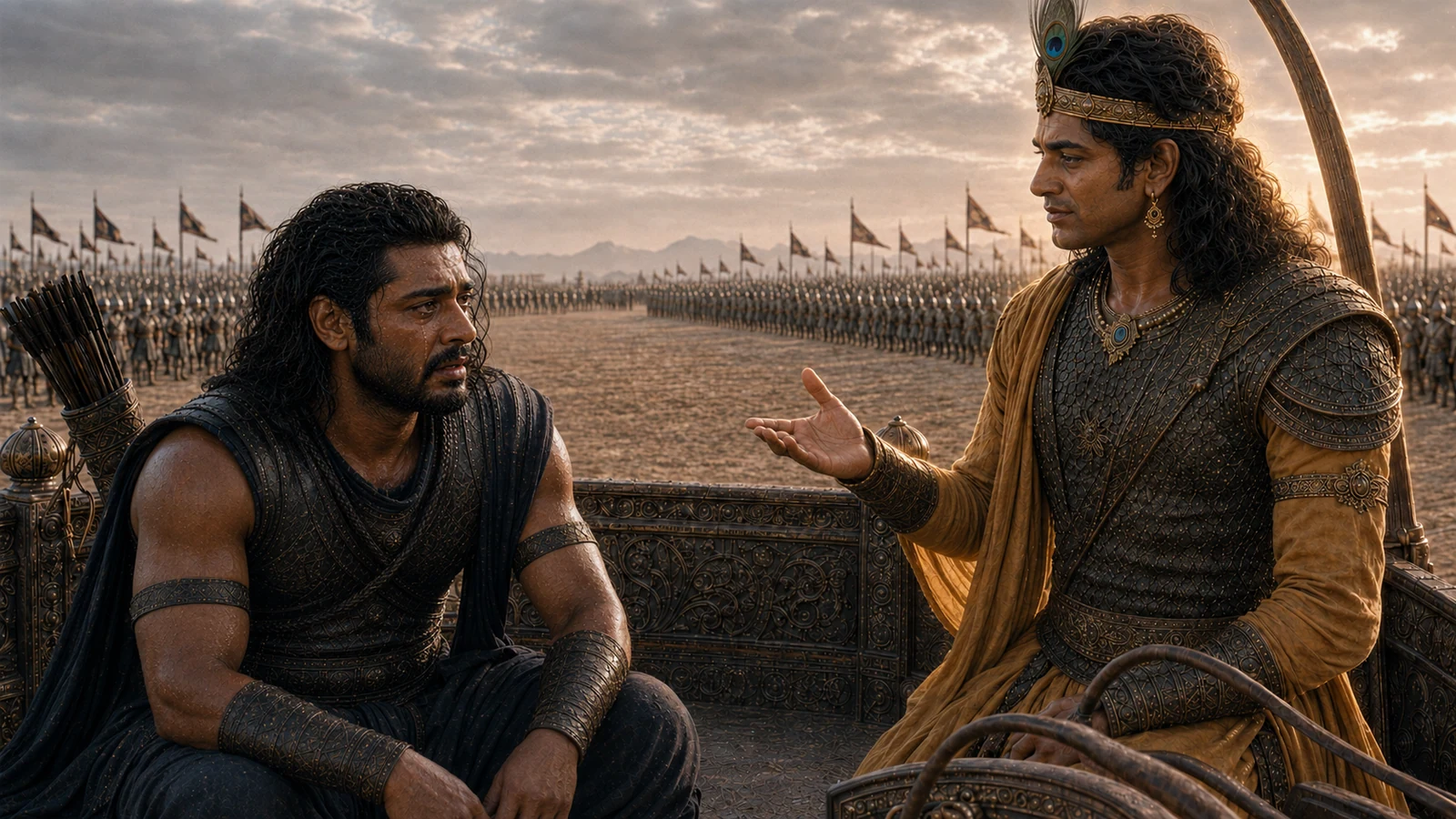
Arjuna sees no good in killing his own people. He no longer wants victory, a kingdom, or its pleasures. At 1.46, he puts aside his bow and arrows and sits down, his mind overwhelmed by grief.26
At 2.7, Arjuna asks Kṛṣṇa to instruct him as a disciple.27


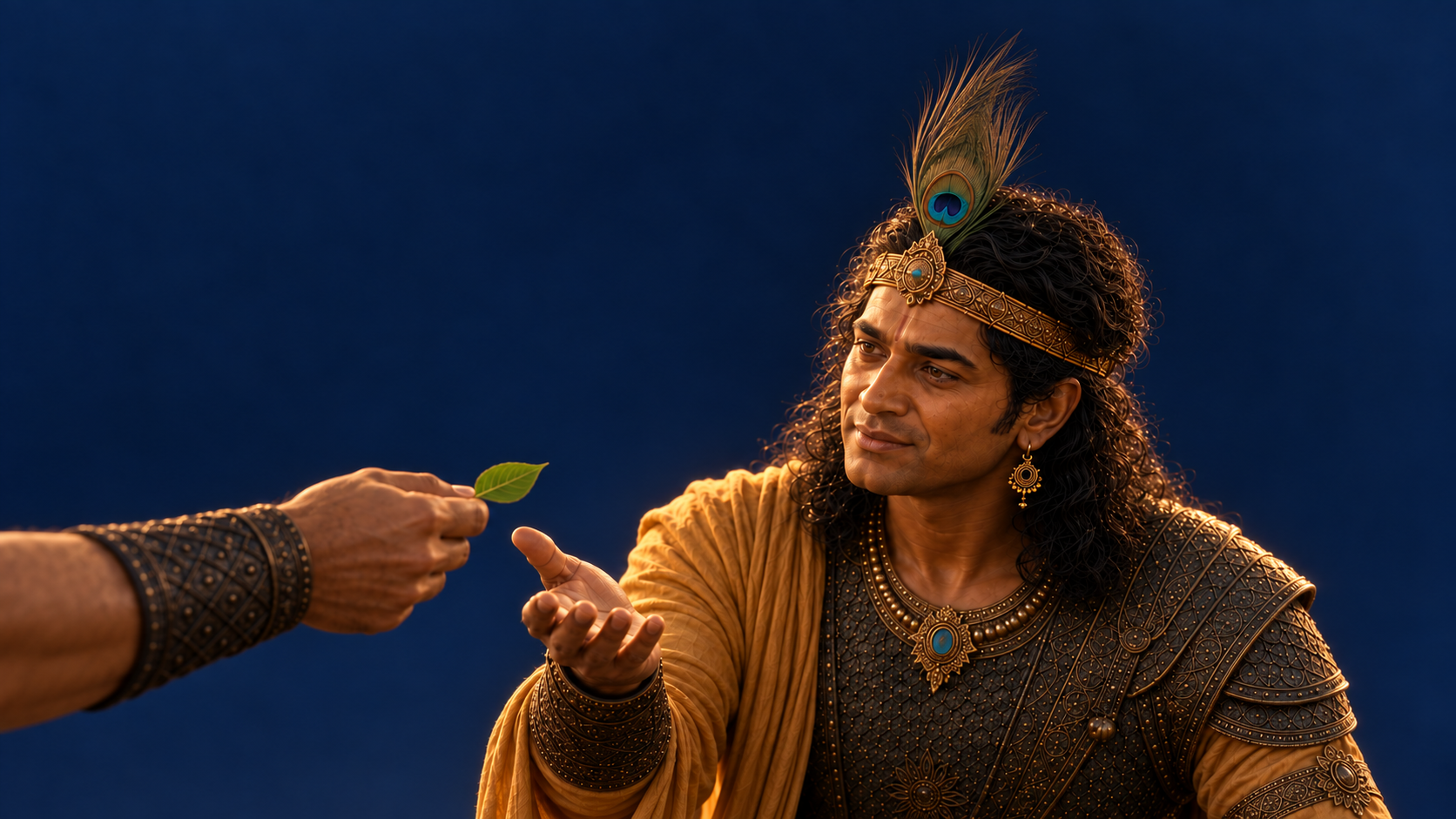

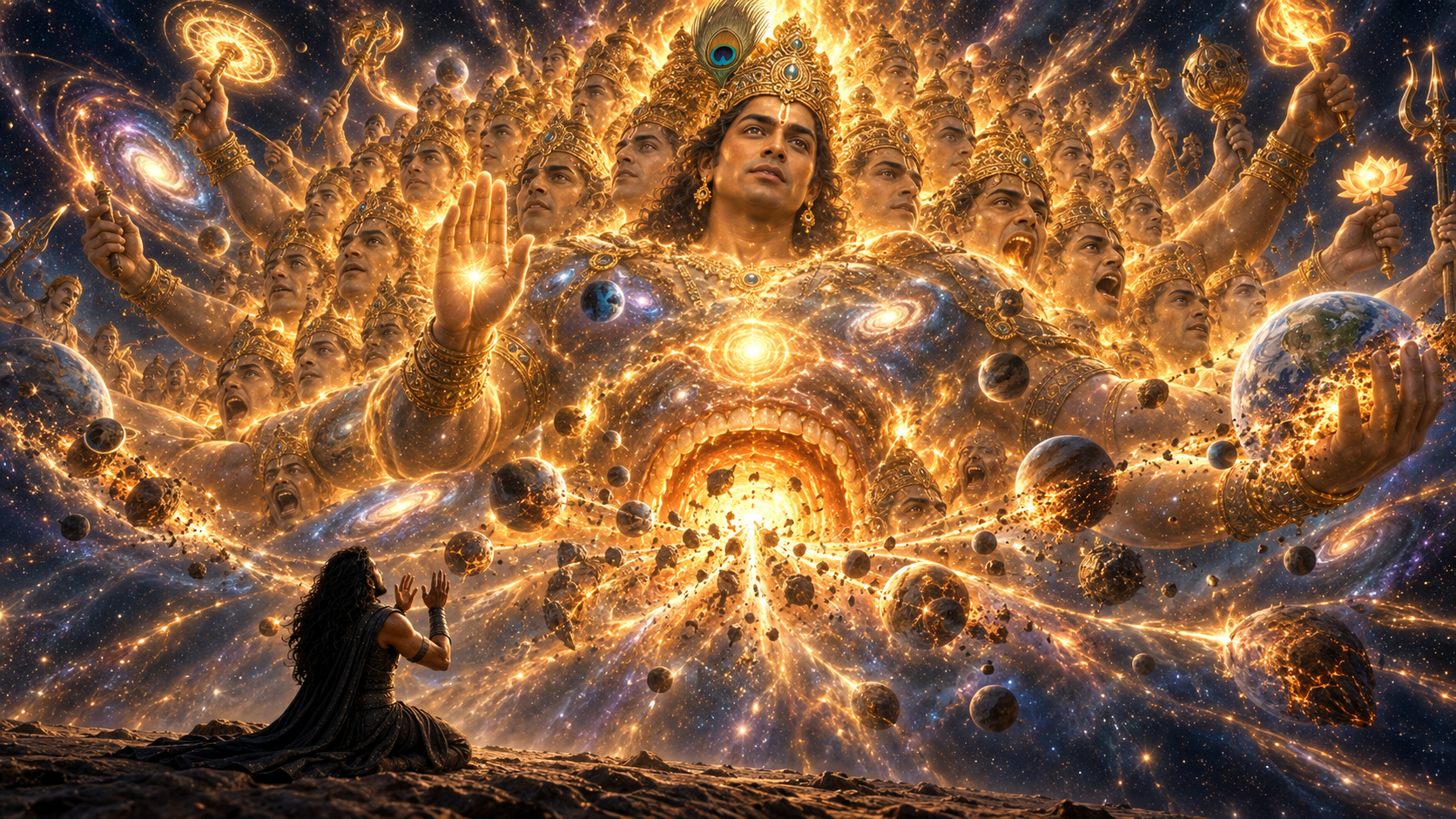
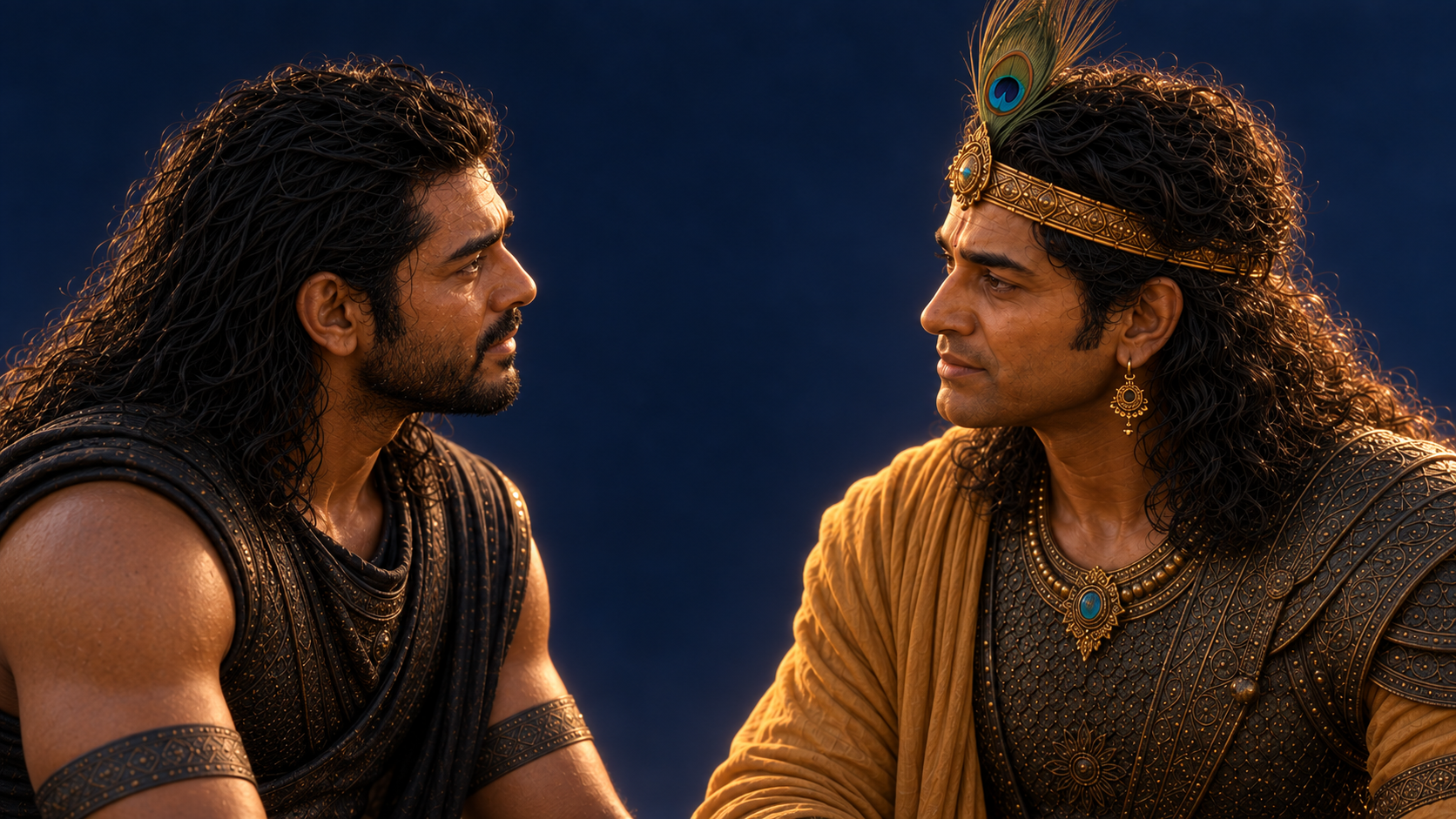

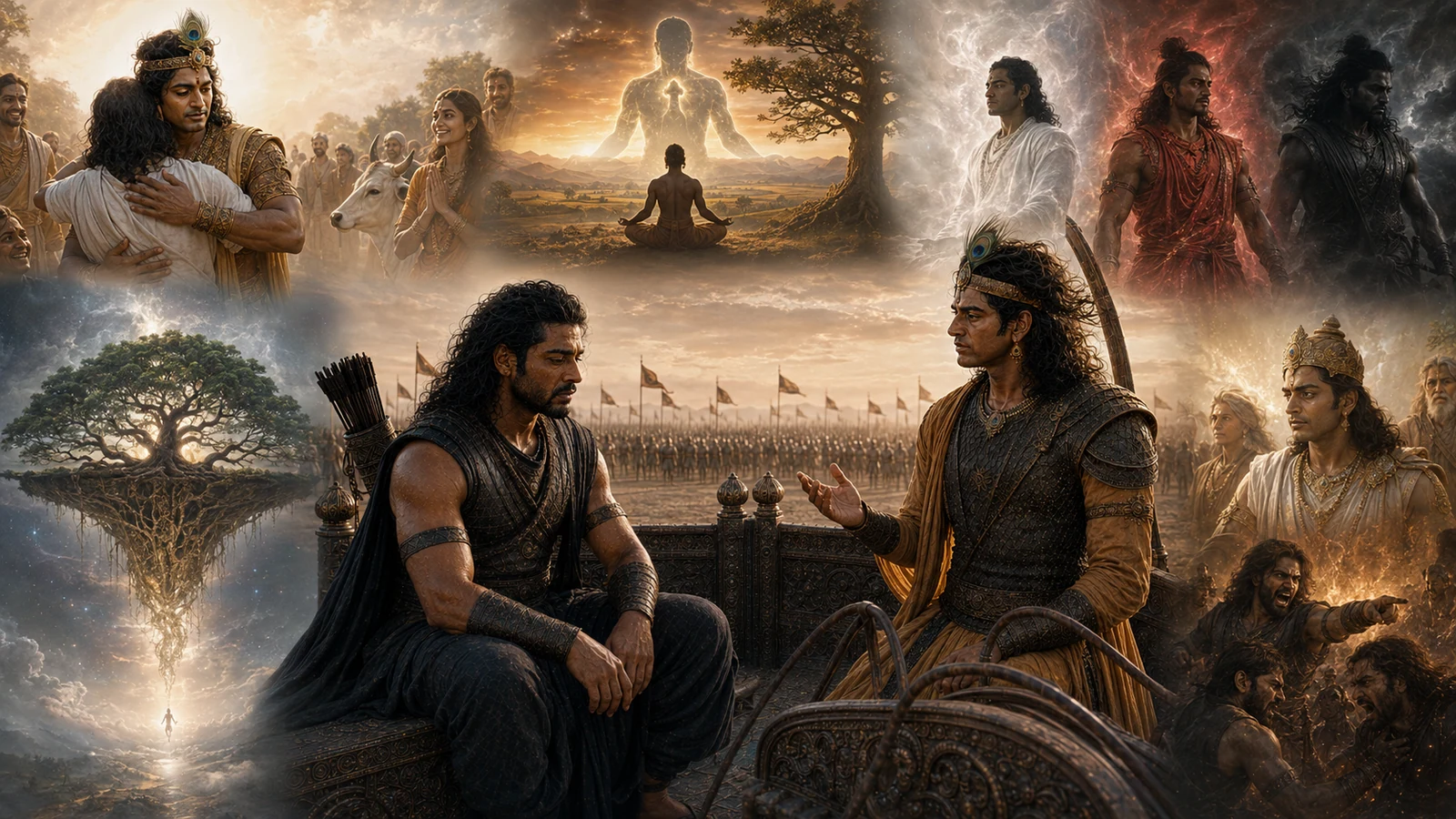
Rules of Combat
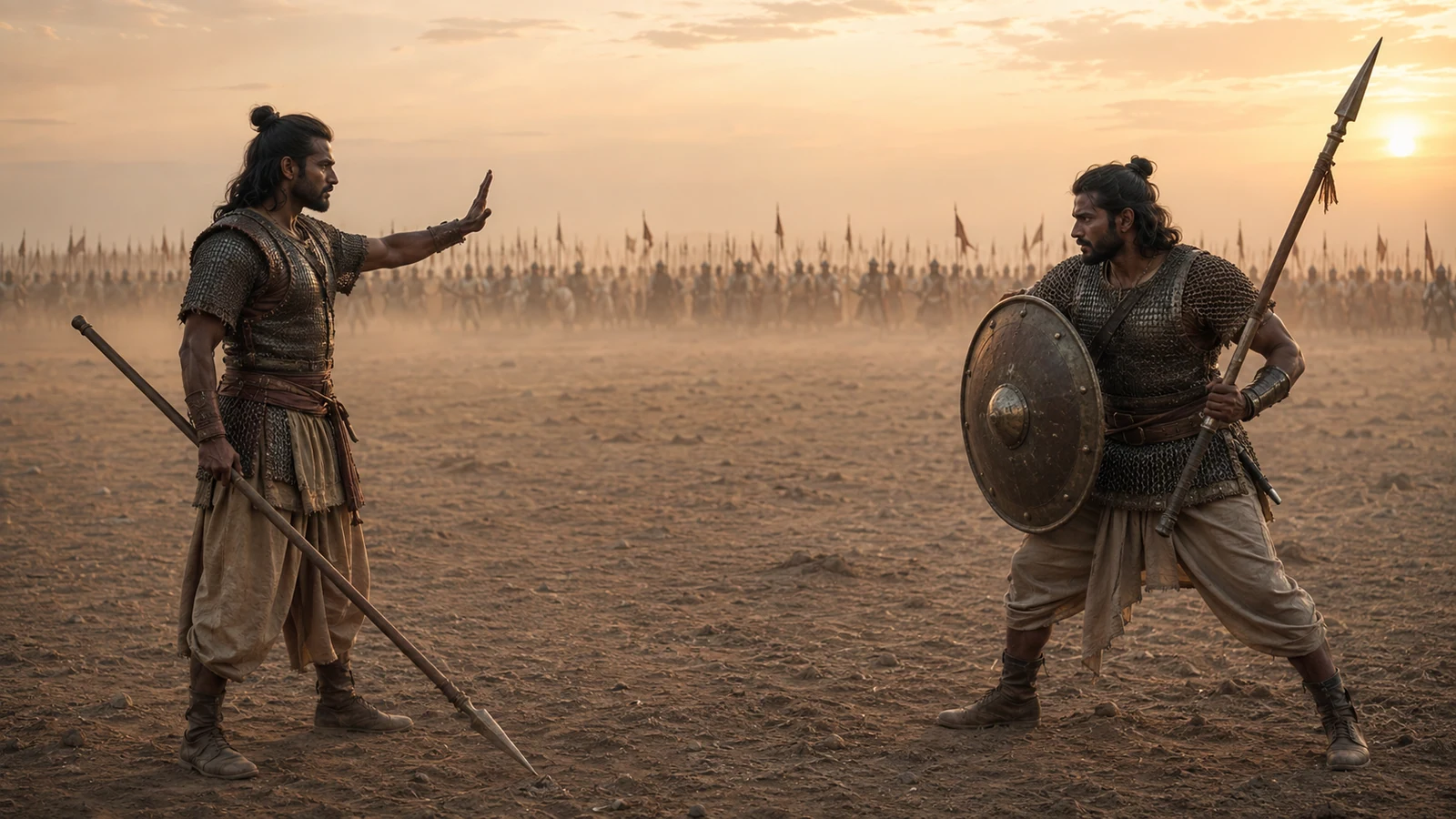
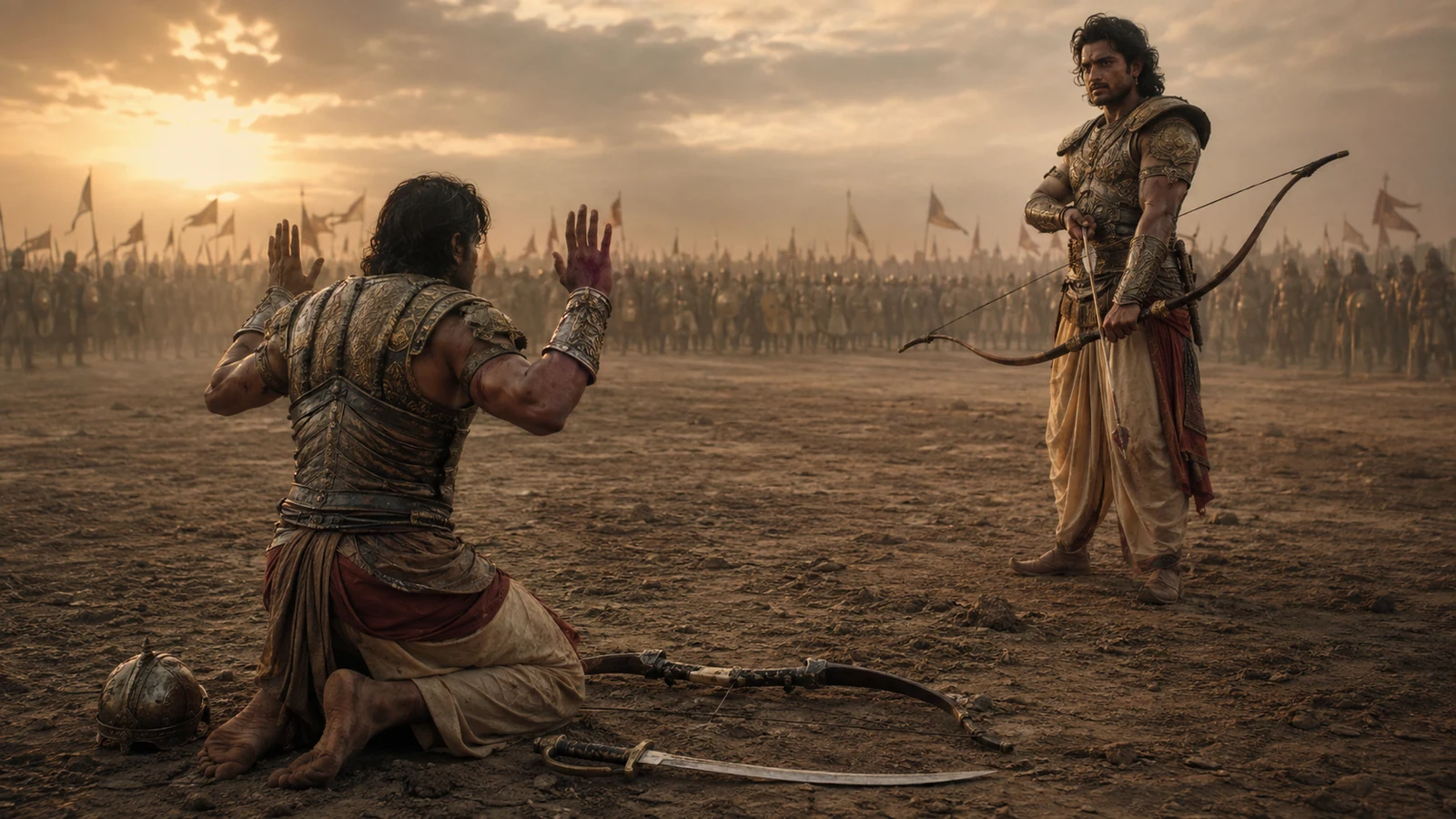
The armies agree to these rules before combat. The rules define an intended code for fair engagements, not an orderly sequence of isolated duels; the epic also depicts massed formations, noise, dust, and battlefield disorder.46
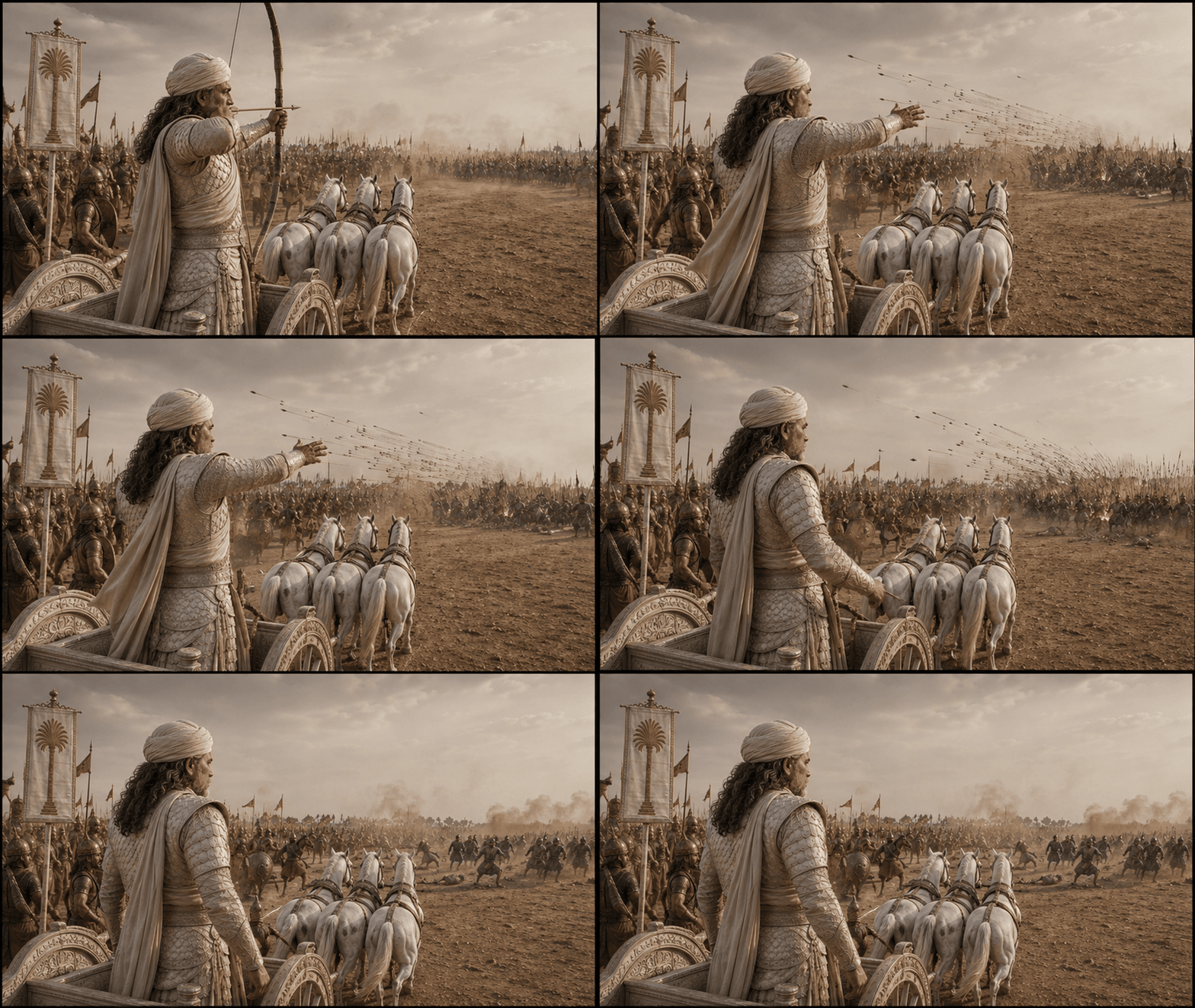
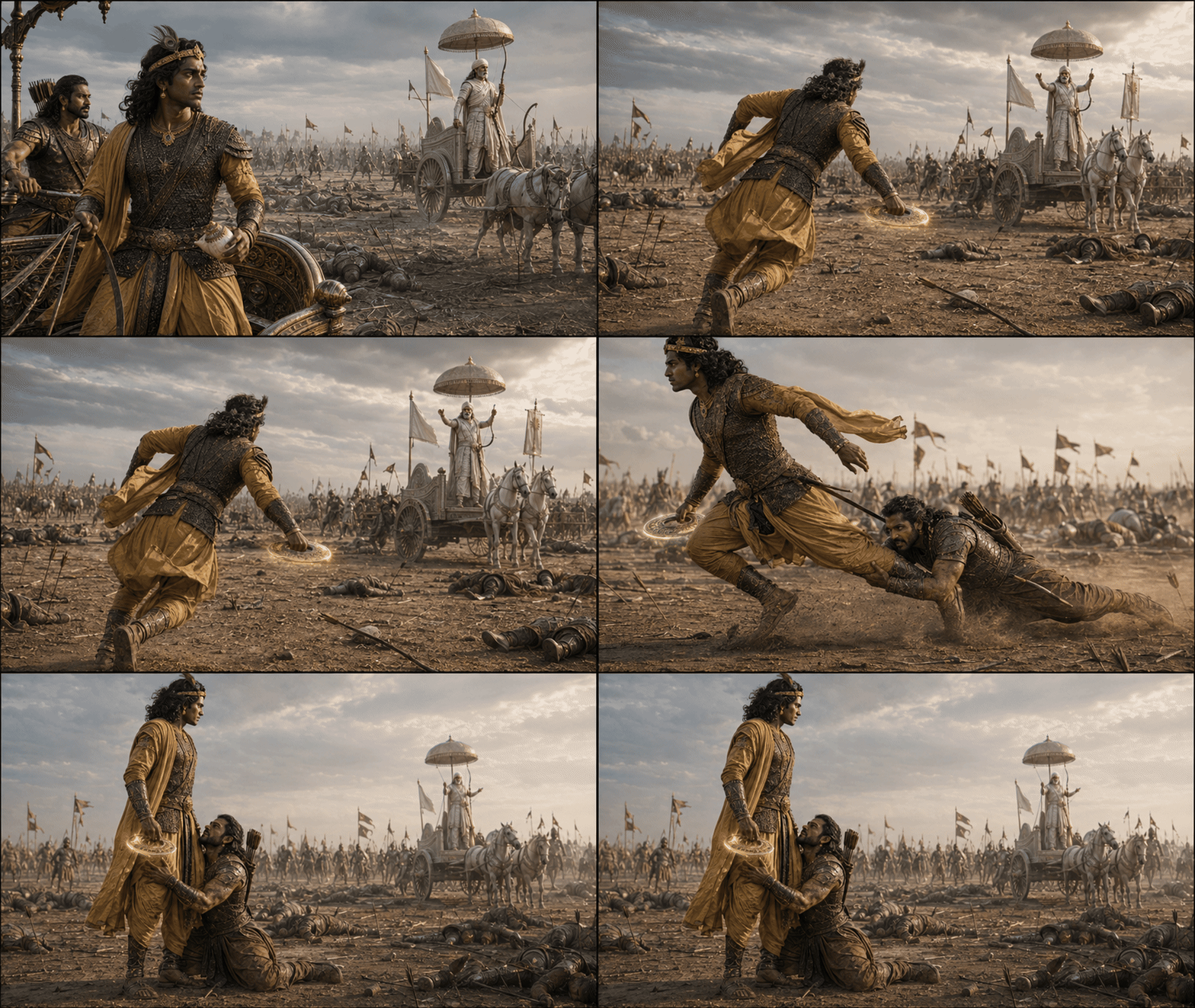
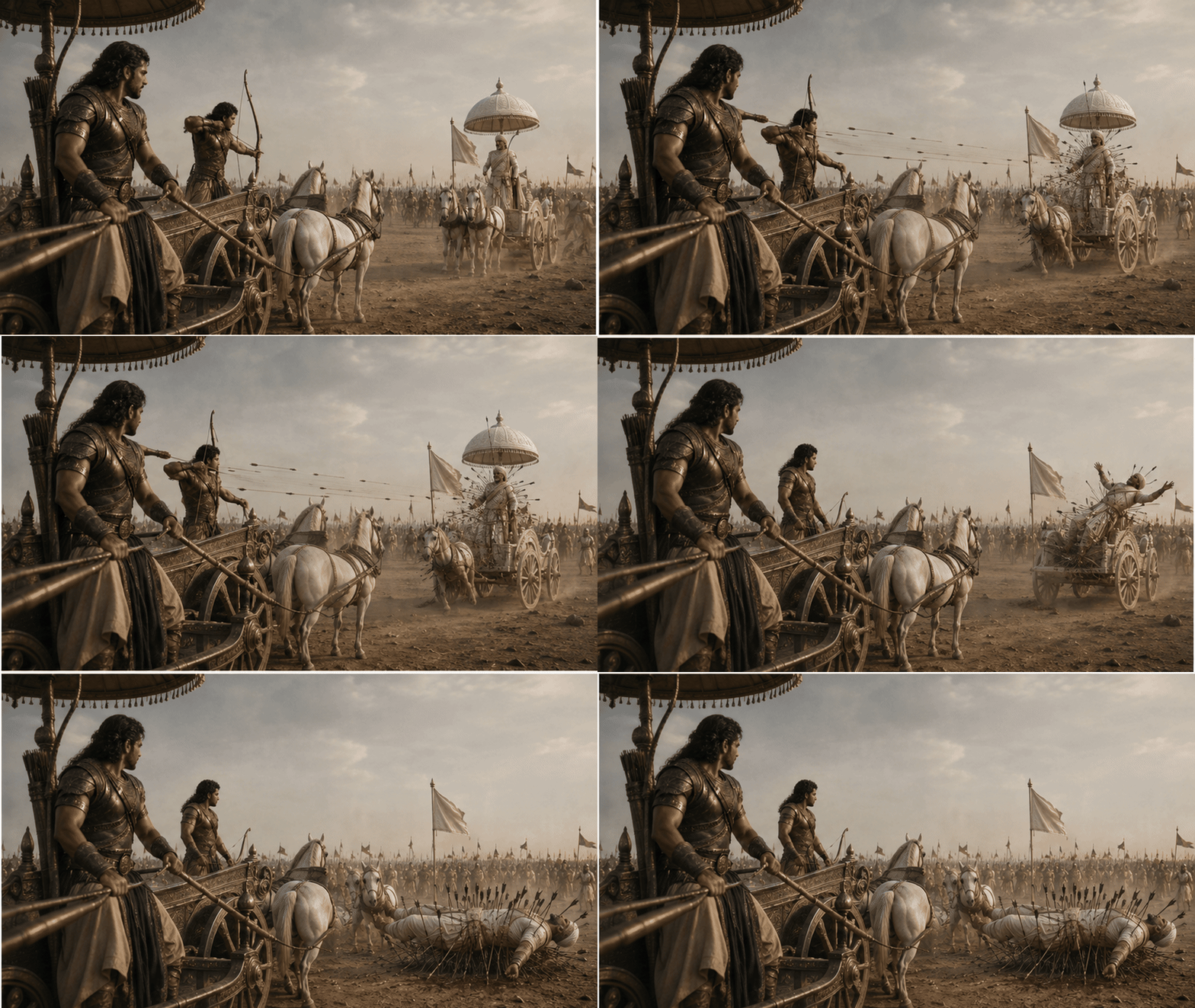
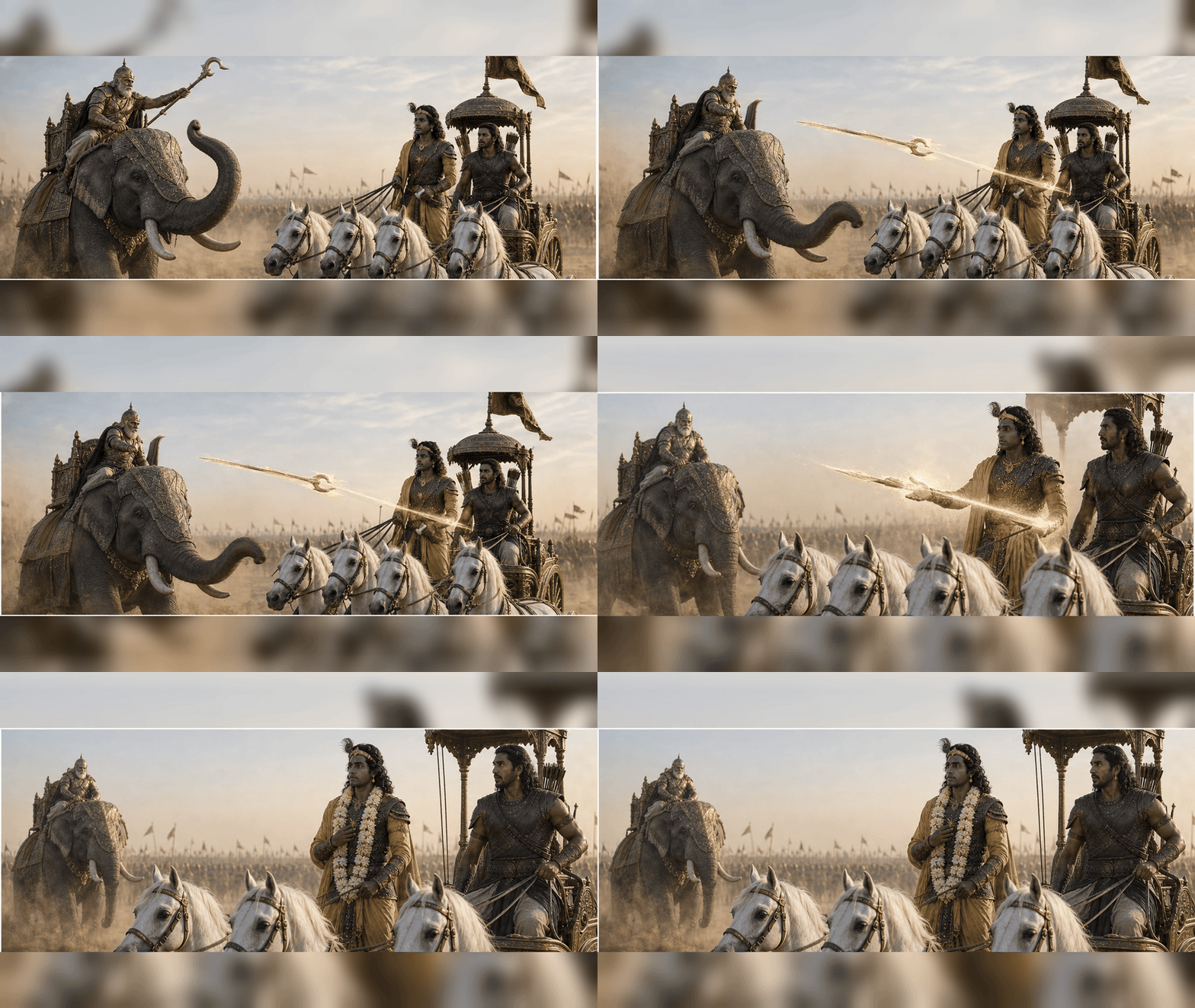
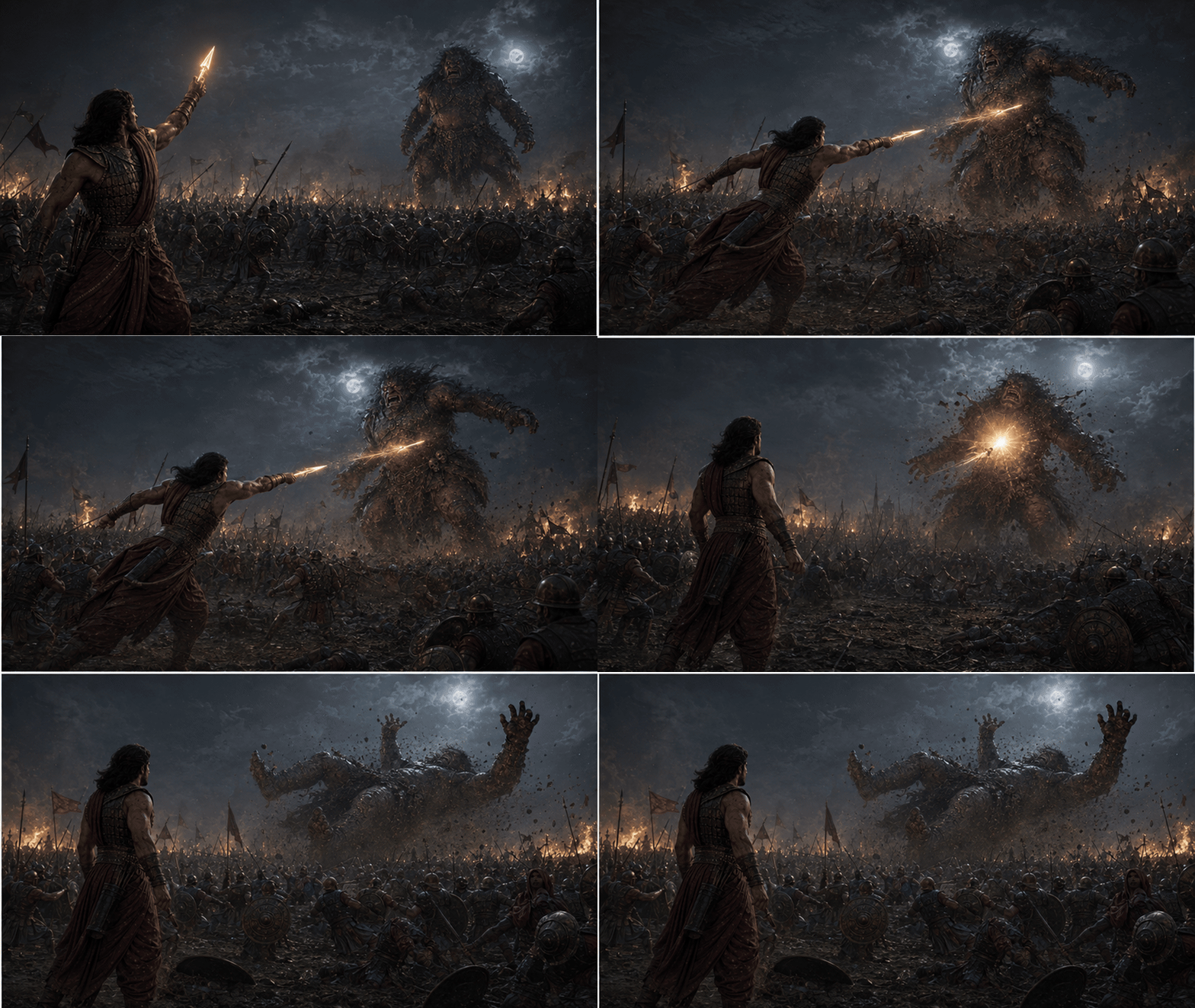
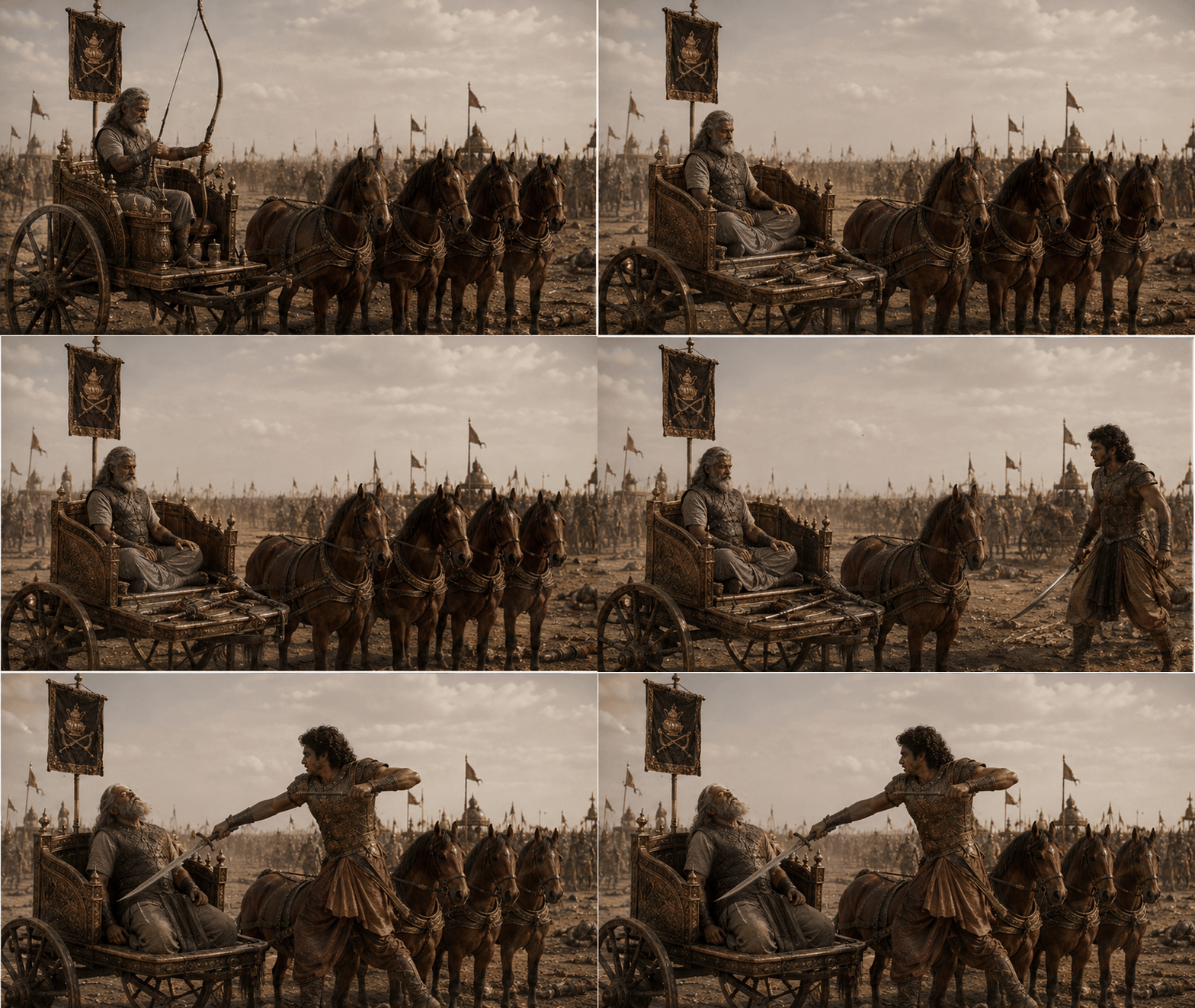
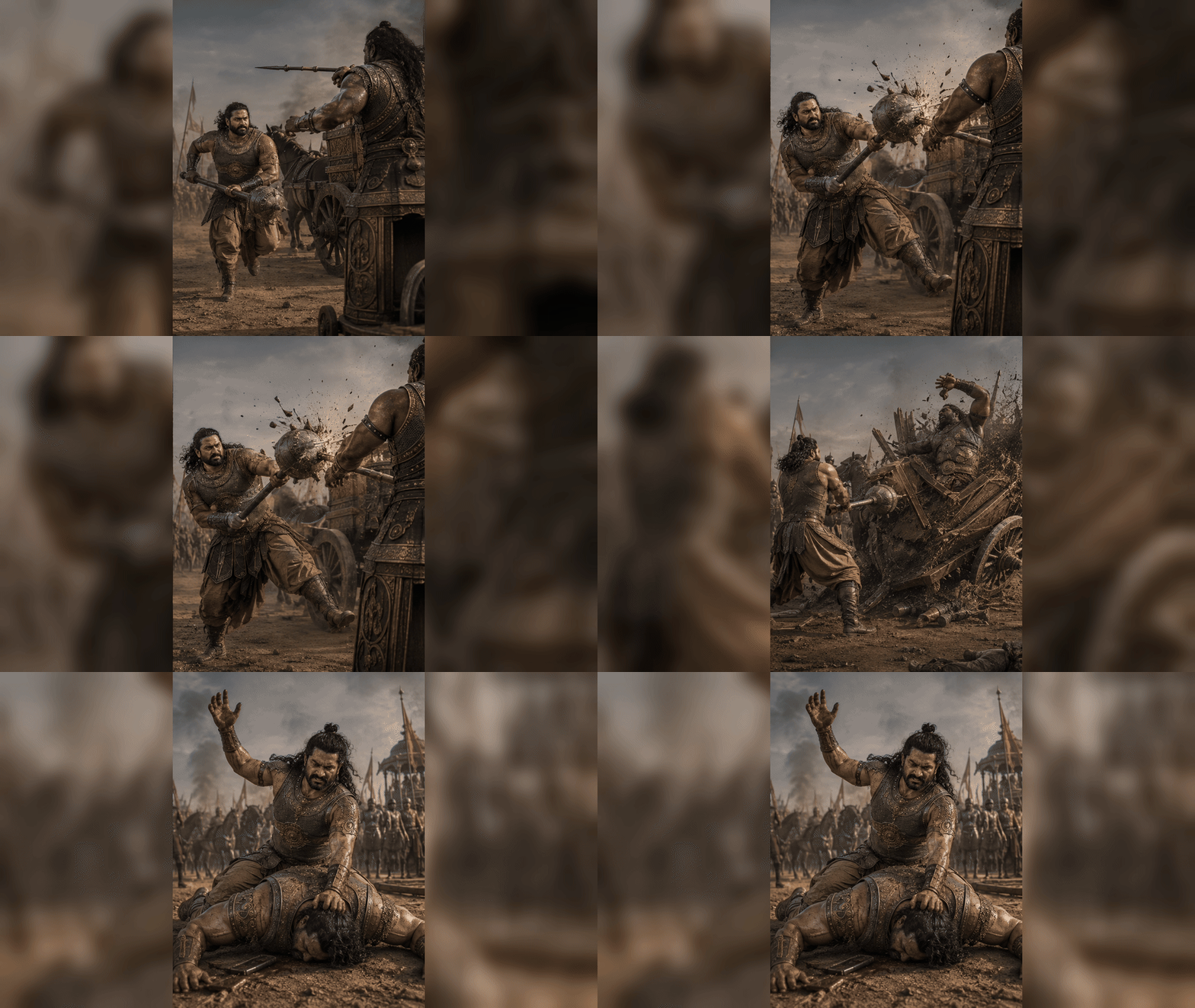
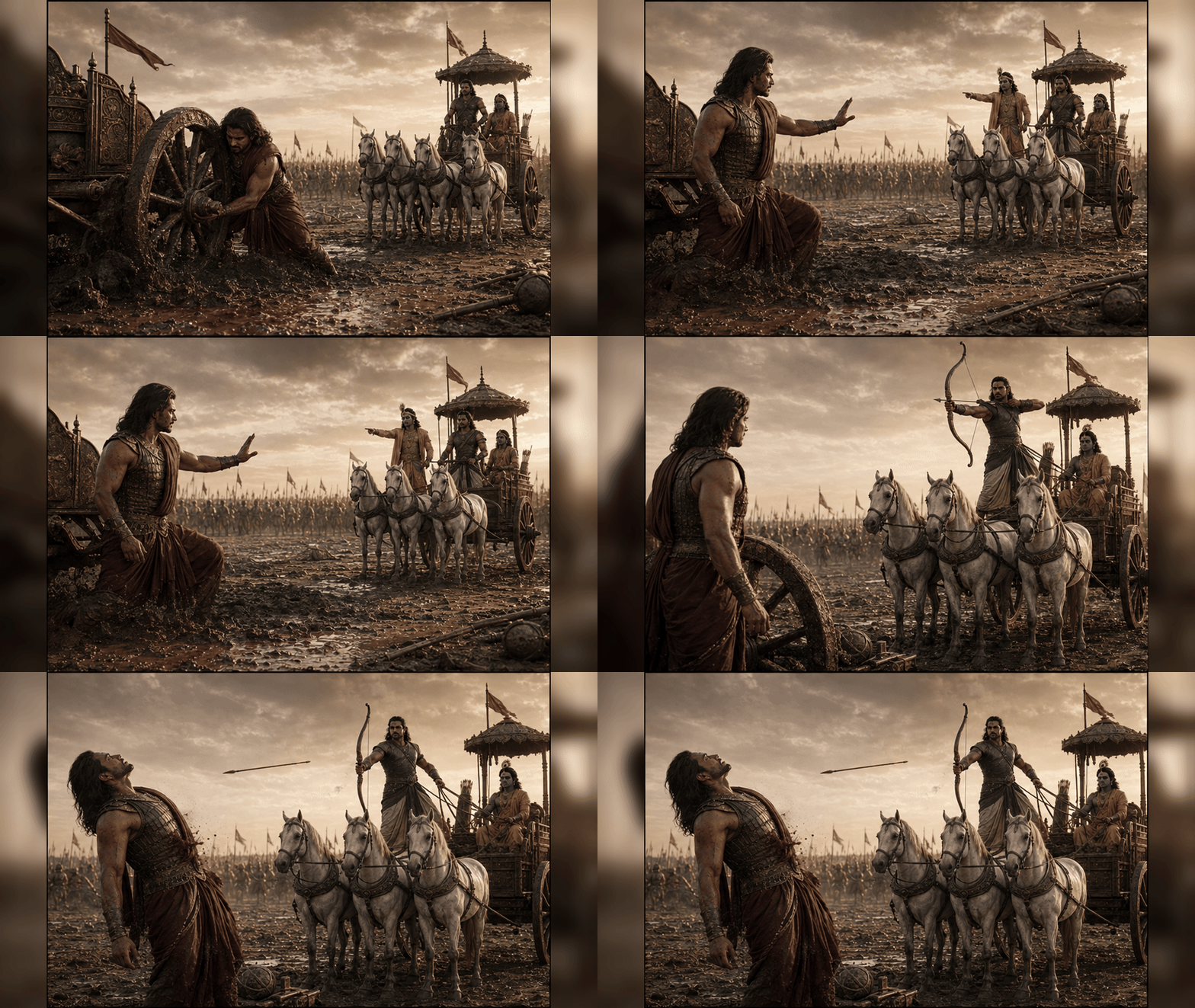
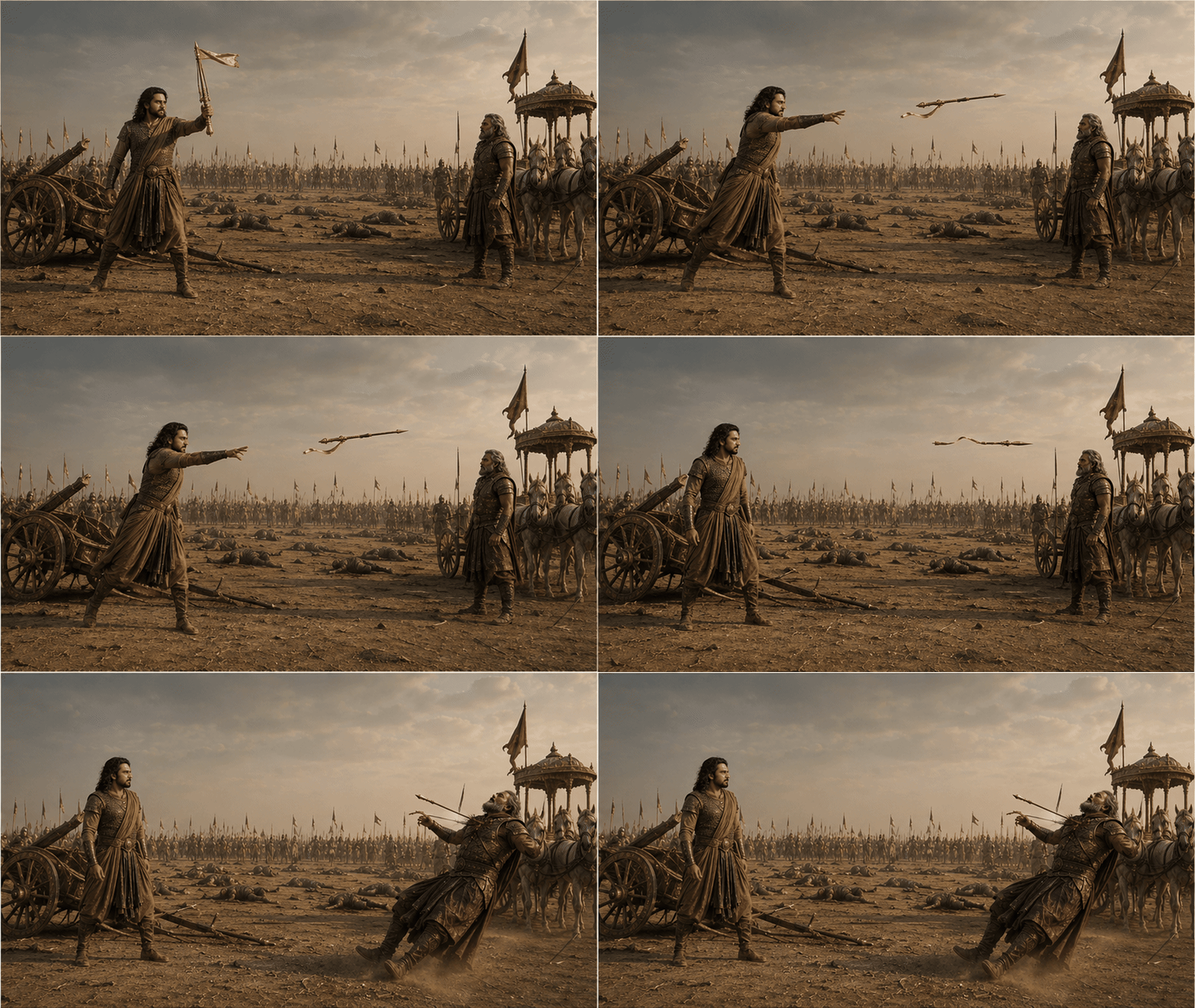
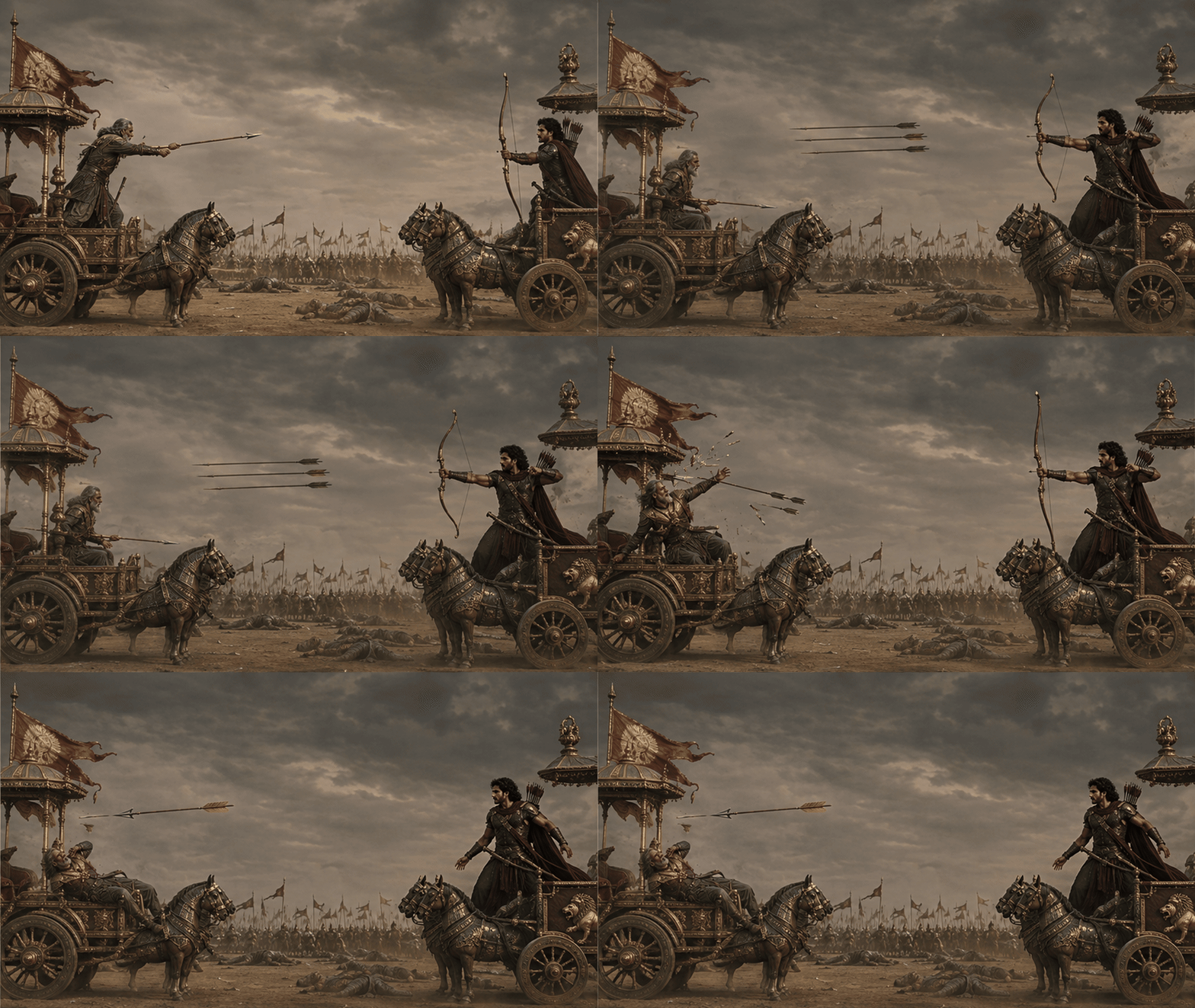
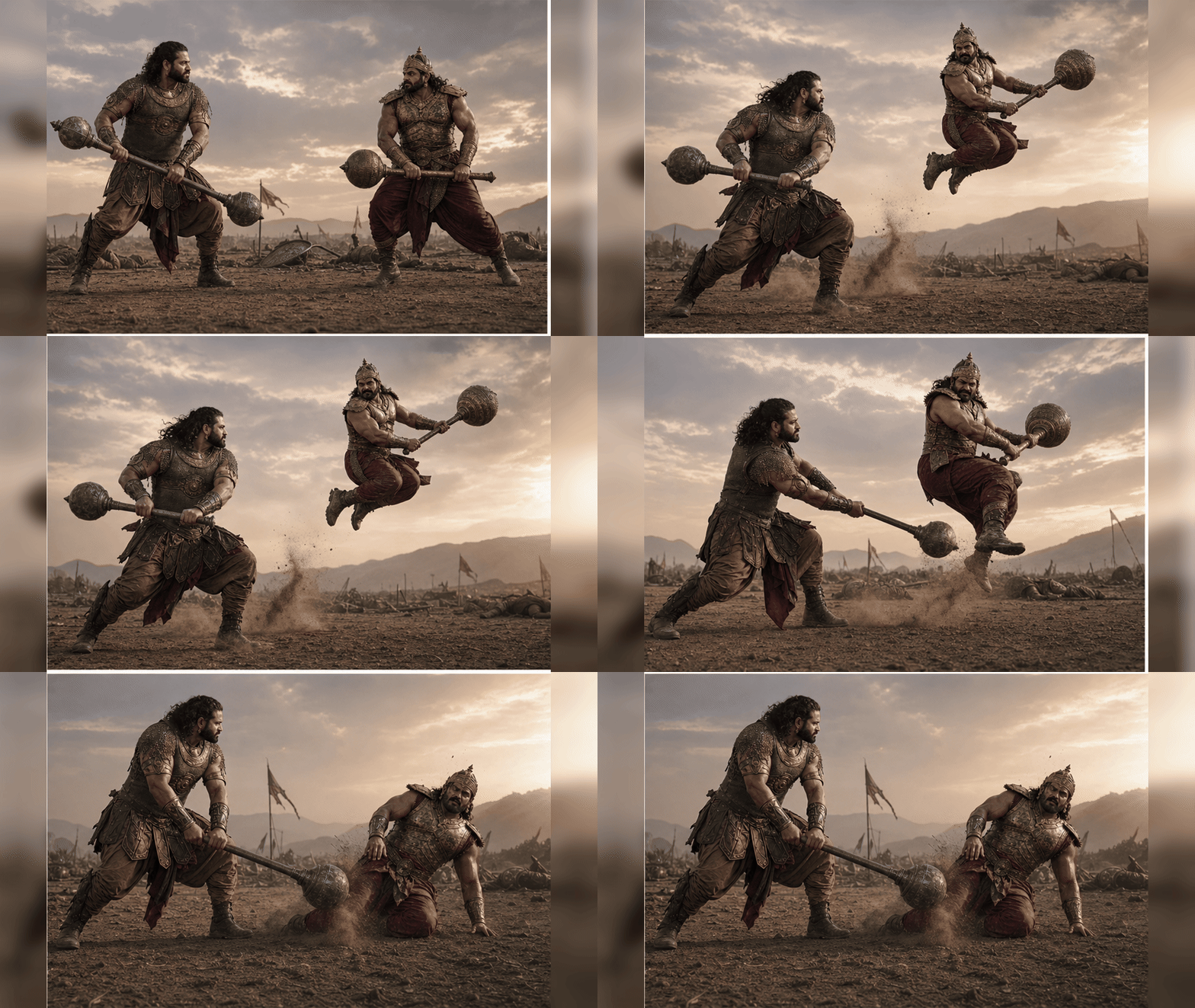
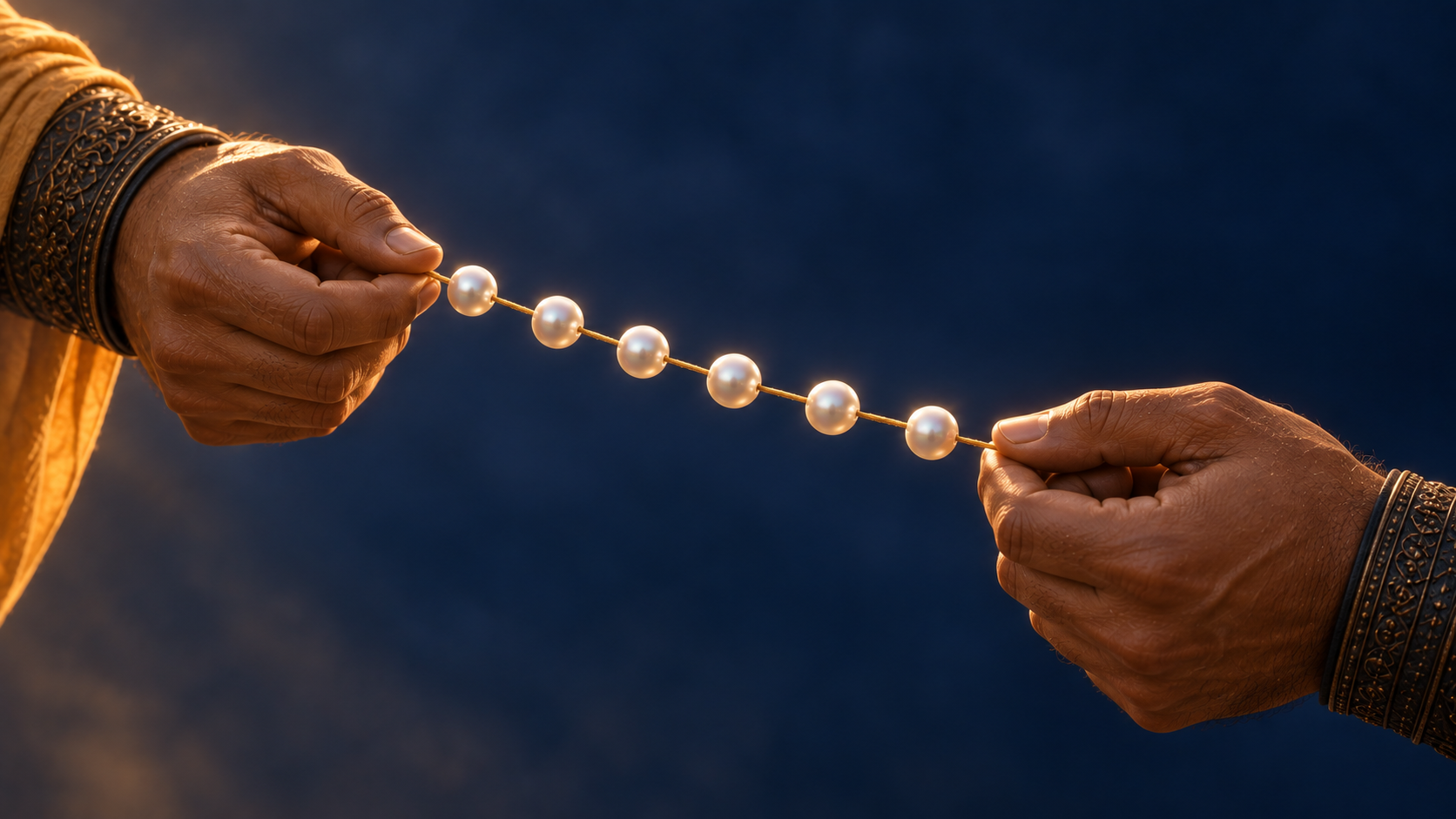
Arjuna begins with a question he cannot resolve: how can he fight the people he loves? Kṛṣṇa asks him to reflect on the teaching and choose. By the end of the Gītā, Arjuna says his confusion has cleared and he will act on Kṛṣṇa’s instruction.62
The battle places that decision among other people’s losses, loyalties, and broken rules. Read alongside those consequences, the dialogue becomes more than a promise of victory. It asks what should guide action when every choice carries a cost.
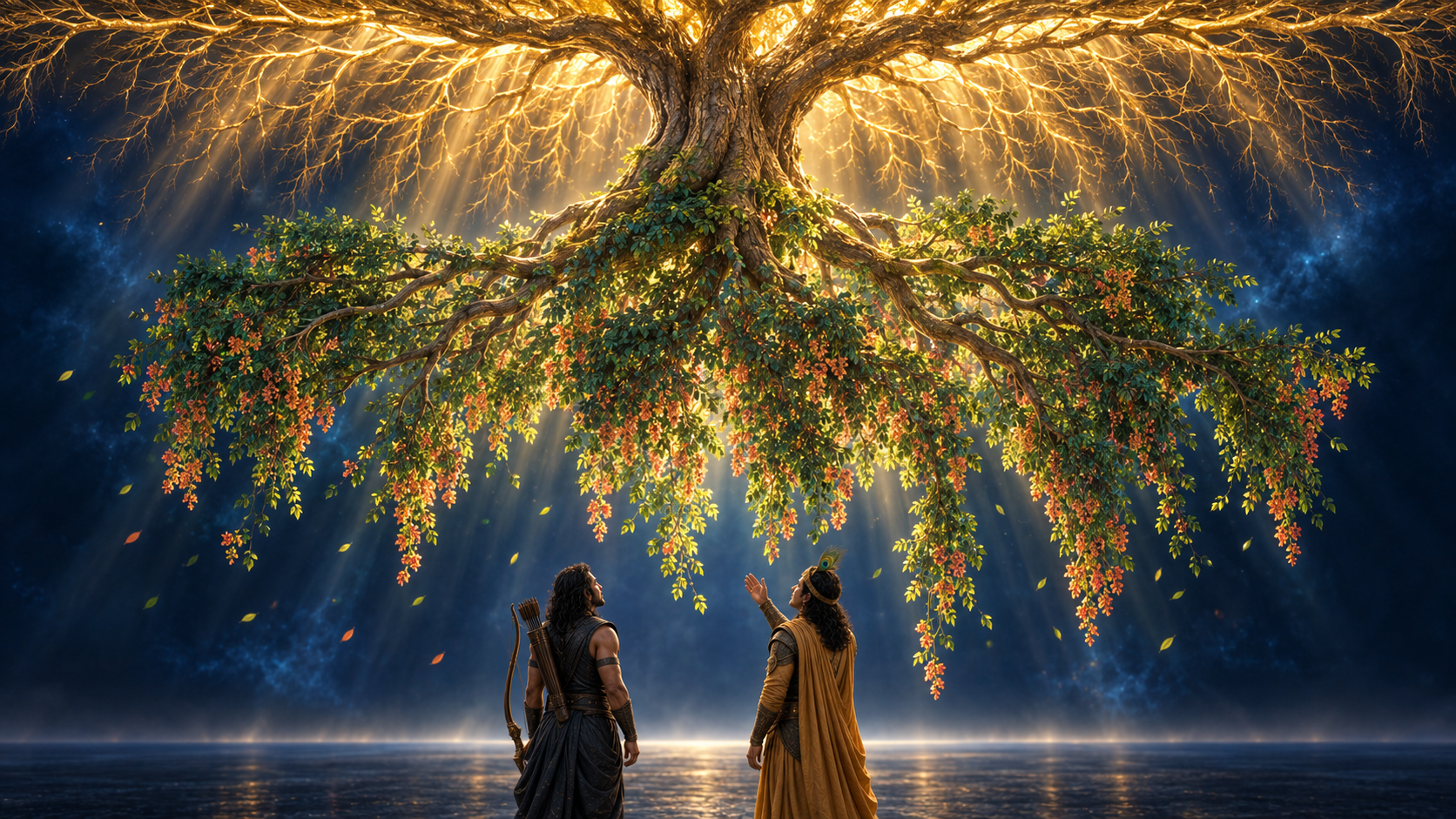
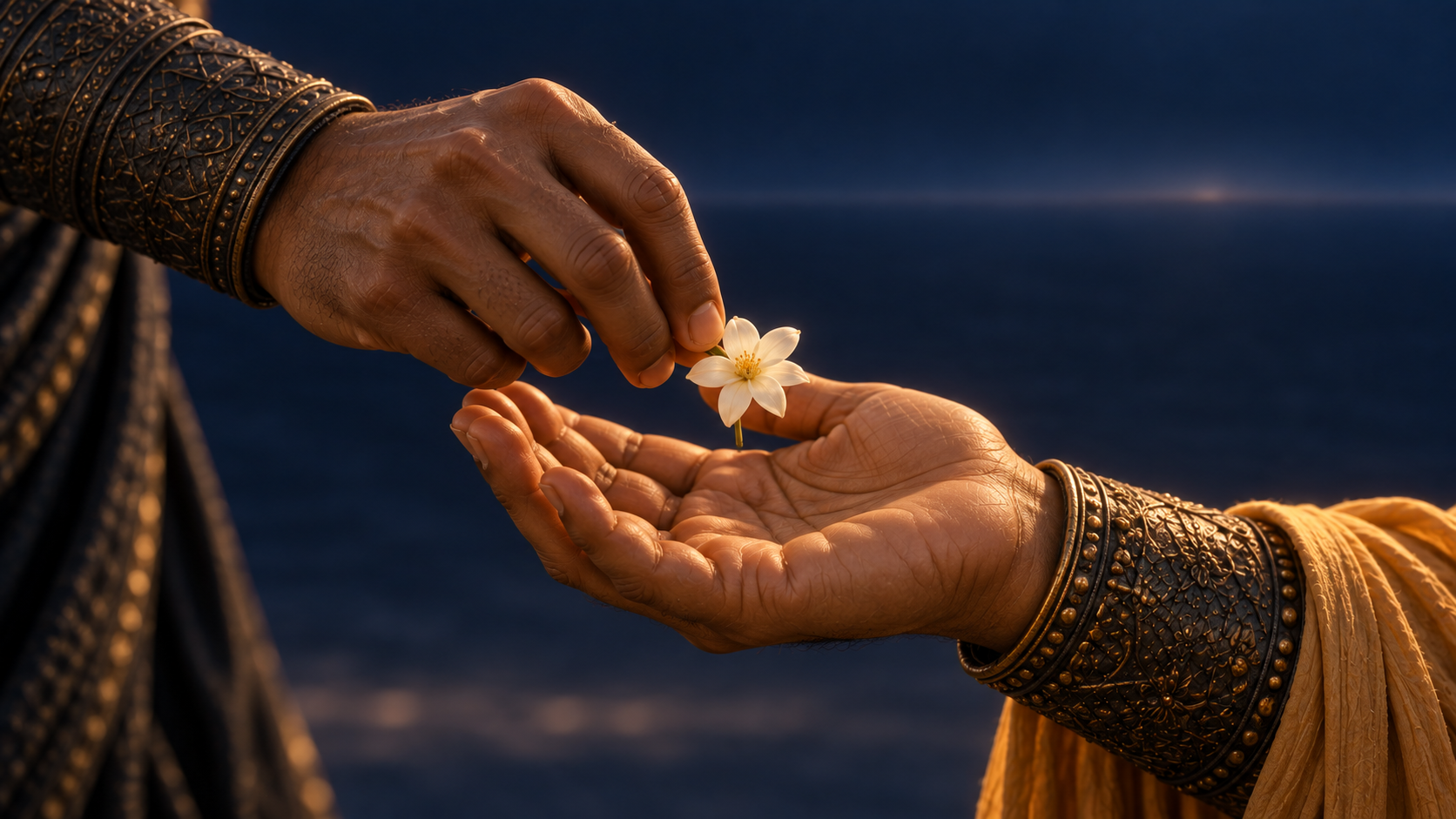
Gītā captions follow A. C. Bhaktivedanta Swami Prabhupāda’s translation; Mahābhārata references use Kisari Mohan Ganguli’s translation and section headings. The numbered notes identify passages, while each work appears once below. Generated images interpret the narratives; they do not establish historical appearances, exact geography, or unstated actions.
- Bhaktivedanta Swami Prabhupāda, A. C. Bhagavad-gītā As It Is. 2nd ed. Bhaktivedanta Book Trust, 1983.
- Bhaktivedanta Swami Prabhupāda, A. C. Teachings of Queen Kuntī. Bhaktivedanta Book Trust, 1978.
- Bhaktivedanta Swami Prabhupāda, A. C. Śrīmad-Bhāgavatam. Canto 9, chap. 22. Bhaktivedanta Book Trust.
- District Administration Kurukshetra. “About District.” Last updated August 21, 2026.
- Indira Gandhi National Centre for the Arts. “Dating the Kurukshetra War.” Accessed September 2, 2026.
- National Center for Seismology. “Station Metadata.” Entry “Kurukshetra (KKR).” Accessed August 23, 2026.
- Madhvācārya. Mahābhārata-tātparya-nirṇaya. English translation published by Hariprasad. “Mahabharata Tatparya Nirnaya: Chapter 11: Part 3.” Anandatirtha Prathishtana, March 23, 2012.
- Natural Earth. “Natural Earth II with Shaded Relief, Water, and Drainages.” Version 3.2.0. Accessed August 23, 2026.
- Schwartzberg, Joseph E. A Historical Atlas of South Asia. 2nd impr. Oxford University Press, 1992.
- Vyāsa. Mahābhārata. Translated by Kisari Mohan Ganguli, 1883–1896.
- Wikidata. “Hastinapur (Q459714).” Accessed August 23, 2026.
- Indira Gandhi National Centre for the Arts, “Dating the Kurukshetra War,” accessed September 2, 2026; District Administration Kurukshetra, “About District,” last updated August 21, 2026.
- A. C. Bhaktivedanta Swami Prabhupāda, Bhagavad-gītā As It Is, 2nd ed. (Bhaktivedanta Book Trust, 1983), introduction, 1.20, translation and purport, and 18.74.
- Vyāsa, Mahābhārata, Sabha Parva and Udyoga Parva; Joseph E. Schwartzberg, A Historical Atlas of South Asia, 2nd impr. (Oxford University Press, 1992), 13–14; Natural Earth, “Natural Earth II with Shaded Relief, Water, and Drainages,” version 3.2.0, accessed August 23, 2026.
- Vyāsa, Mahābhārata, trans. Kisari Mohan Ganguli, Ādi Parva, sec. 95 (genealogy), sec. 97 (Śantanu and Gaṅgā), and Udyoga Parva, sec. 149 (the brothers and succession). No precise reign length or accession age is supplied here.
- Vyāsa, Mahābhārata, trans. Kisari Mohan Ganguli (1883–1896), Ādi Parva, sec. 63, sec. 95, sec. 97, sec. 98, and sec. 100; A. C. Bhaktivedanta Swami Prabhupāda, Śrīmad-Bhāgavatam 9.22.25; Prabhupāda, Bhagavad-gītā As It Is 1.2–18.
- Vyāsa, Mahābhārata, Ādi Parva, sec. 61, sec. 63, sec. 95, sec. 102, sec. 105, sec. 106, sec. 109, sec. 118, sec. 125, and sec. 143.
- Madhvācārya, Mahābhārata-tātparya-nirṇaya, 11.81, English translation published by Hariprasad, “Mahabharata Tatparya Nirnaya: Chapter 11: Part 3,” Anandatirtha Prathishtana, March 23, 2012.
- Vyāsa, Mahābhārata, Ādi Parva, sec. 95.
- Vyāsa, Mahābhārata, Ādi Parva, sec. 102, sec. 105, and sec. 106.
- Vyāsa, Mahābhārata, Ādi Parva, sec. 102, sec. 106, sec. 110, sec. 112, and sec. 113.
- Vyāsa, Mahābhārata, Ādi Parva, sec. 109.
- Vyāsa, Mahābhārata, Ādi Parva, sec. 118, sec. 125, and sec. 143.
- Vyāsa, Mahābhārata, Ādi Parva, sec. 143; Sabha Parva, sec. 75; Udyoga Parva, sec. 31, sec. 87, and sec. 92.
- A. C. Bhaktivedanta Swami Prabhupāda, introduction to Teachings of Queen Kuntī (Bhaktivedanta Book Trust, 1978).
- Vyāsa, Mahābhārata, Bhīṣma Parva, sec. 2 (divine sight) and sec. 19 (formations before sunrise); Prabhupāda, Bhagavad-gītā As It Is, 1.1 and 18.74.
- National Center for Seismology, “Station Metadata,” entry “Kurukshetra (KKR),” accessed August 23, 2026; Wikidata, “Hastinapur (Q459714),” accessed August 23, 2026.
- Vyāsa, Mahābhārata, Bhīṣma Parva, sec. 2.
- Vyāsa, Mahābhārata, Ādi Parva, sec. 2; Bhīṣma Parva, sec. 1, sec. 16, and sec. 19.
- Vyāsa, Mahābhārata, Ādi Parva, sec. 1.
- Prabhupāda, Bhagavad-gītā As It Is 1.2–18.
- Vyāsa, Mahābhārata, Ādi Parva, sec. 136; Śalya Parva, sec. 16; Karṇa Parva, sec. 84; and Droṇa Parva, sec. 166.
- Prabhupāda, Bhagavad-gītā As It Is 1.21–22.
- Prabhupāda, Bhagavad-gītā As It Is, 1.24–25.
- Prabhupāda, Bhagavad-gītā As It Is 1.26.
- Prabhupāda, Bhagavad-gītā As It Is 1.28–30.
- Prabhupāda, Bhagavad-gītā As It Is, 1.31 and 1.46.
- Prabhupāda, Bhagavad-gītā As It Is 2.7.
- Prabhupāda, Bhagavad-gītā As It Is, 1.26–35, 1.46. Caption summarizes these selected passages; the illustration is an artistic interpretation.
- Prabhupāda, Bhagavad-gītā As It Is, 2.13, 2.20–22. Caption summarizes these selected passages; the illustration is an artistic interpretation.
- Prabhupāda, Bhagavad-gītā As It Is, 3.1–9, 3.19, 3.30. Caption summarizes these selected passages; the illustration is an artistic interpretation.
- Prabhupāda, Bhagavad-gītā As It Is, 4.7–8, 4.34, 4.42. Caption summarizes these selected passages; the illustration is an artistic interpretation.
- Prabhupāda, Bhagavad-gītā As It Is, 5.2, 5.10–12. Caption summarizes these selected passages; the illustration is an artistic interpretation.
- Prabhupāda, Bhagavad-gītā As It Is, 6.26, 6.34–35, 6.40–47. Caption summarizes these selected passages; the illustration is an artistic interpretation.
- Prabhupāda, Bhagavad-gītā As It Is, 7.4–7, 7.13–14, 7.19. Caption summarizes these selected passages; the illustration is an artistic interpretation.
- Prabhupāda, Bhagavad-gītā As It Is, 8.2, 8.5–8, 8.14–16, 8.21–22. Caption summarizes these selected passages; the illustration is an artistic interpretation.
- Prabhupāda, Bhagavad-gītā As It Is, 9.26–28, 9.32–34. Caption summarizes these selected passages; the illustration is an artistic interpretation.
- Prabhupāda, Bhagavad-gītā As It Is, 10.17–21, 10.25, 10.30, 10.41–42. Caption summarizes these selected passages; the illustration is an artistic interpretation.
- Prabhupāda, Bhagavad-gītā As It Is, 11.8–14, 11.26–32, 11.45–51. Caption summarizes these selected passages; the illustration is an artistic interpretation.
- Prabhupāda, Bhagavad-gītā As It Is, 12.1–12, 12.13–20. Caption summarizes these selected passages; the illustration is an artistic interpretation.
- Prabhupāda, Bhagavad-gītā As It Is, 13.1–7, 13.23. Caption summarizes these selected passages; the illustration is an artistic interpretation.
- Prabhupāda, Bhagavad-gītā As It Is, 14.5–10, 14.19–26. Caption summarizes these selected passages; the illustration is an artistic interpretation.
- Prabhupāda, Bhagavad-gītā As It Is, 15.1–7, 15.13–20. Caption summarizes these selected passages; the illustration is an artistic interpretation.
- Prabhupāda, Bhagavad-gītā As It Is, 16.1–5, 16.21–24. Caption summarizes these selected passages; the illustration is an artistic interpretation.
- Prabhupāda, Bhagavad-gītā As It Is, 17.1–3, 17.20–28. Caption summarizes these selected passages; the illustration is an artistic interpretation.
- Prabhupāda, Bhagavad-gītā As It Is, 18.63–66, 18.73. Caption summarizes these selected passages; the illustration is an artistic interpretation.
- Vyāsa, Mahābhārata, Bhīṣma Parva, sec. 1.
- Vyāsa, Mahābhārata, Bhīṣma Parva, sec. 59.
- Vyāsa, Mahābhārata, Bhīṣma Parva, sec. 59.
- Vyāsa, Mahābhārata, Bhīṣma Parva, sec. 120.
- Vyāsa, Mahābhārata, Droṇa Parva, sec. 27.
- Vyāsa, Mahābhārata, Droṇa Parva, sec. 41.
- Vyāsa, Mahābhārata, Droṇa Parva, sec. 47.
- Vyāsa, Mahābhārata, Droṇa Parva, sec. 145.
- Vyāsa, Mahābhārata, Droṇa Parva, sec. 175.
- Vyāsa, Mahābhārata, Droṇa Parva, sec. 179.
- Vyāsa, Mahābhārata, Droṇa Parva, sec. 191 and sec. 193.
- Vyāsa, Mahābhārata, Karṇa Parva, sec. 83.
- Vyāsa, Mahābhārata, Karṇa Parva, sec. 91.
- Vyāsa, Mahābhārata, Śalya Parva, sec. 17.
- Vyāsa, Mahābhārata, Śalya Parva, sec. 28.
- Vyāsa, Mahābhārata, Śalya Parva, sec. 58.
- Prabhupāda, Bhagavad-gītā As It Is, 2.4–7, 18.63, and 18.73.